Best Yacht Charter Options: The Definitive Strategic Guide for 2026
The global maritime charter industry operates at the intersection of extreme engineering, hospitality, and complex logistics. Unlike other sectors of the high-end travel market, yachting remains one of the few domains where the asset itself is a self-contained, mobile jurisdiction. best yacht charter options, This autonomy introduces a layer of operational complexity that is often overlooked in surface-level brochures. To navigate the current market, one must view a charter not as a product, but as a temporary management contract over a sophisticated maritime platform.
As we look toward 2026, the variables governing the “best” experiences have shifted. Sustainability mandates, such as the expansion of Emission Control Areas (ECAs), are influencing hull design and propulsion choices, while the geopolitical landscape has altered traditional cruising grounds. A charterer is no longer just selecting a vessel; they are selecting a crew, a technical infrastructure, and a legal framework that must remain resilient against maritime law, weather volatility, and the nuances of international port state control.
The selection process for a charter is a multi-dimensional optimization problem. It requires balancing the physical capabilities of the vessel—its draft, speed, and stabilization—with the “soft” assets of the crew and the logistical reach of the broker. This article provides a rigorous examination of the structural mechanics of the industry, moving beyond the aesthetics of the sun deck to analyze the systemic realities that define a successful voyage.
Understanding “best yacht charter options.”
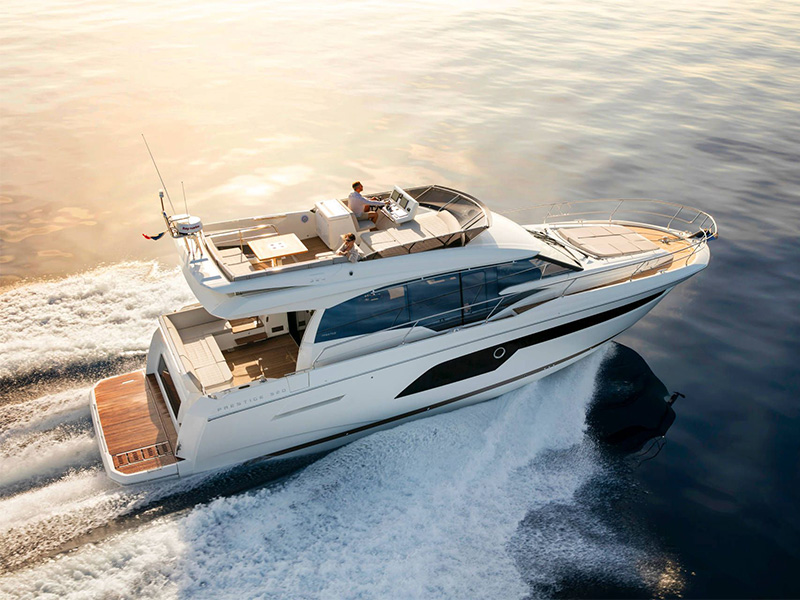
Defining the best yacht charter options requires a departure from the “larger is better” fallacy. In maritime logistics, size often acts as a constraint rather than an asset. A 100-meter mega-yacht may offer unparalleled internal volume, but its draft will prohibit access to the secluded coves of the Exumas or the shallower ports of the Adriatic. Therefore, “best” is a function of mission-alignment. The ideal vessel is the one that minimizes the distance—both physical and psychological—between the traveler and their specific environmental objectives.
A common misunderstanding in the charter market is the over-reliance on the “build year.” While a new vessel offers the latest in interior design and silent propulsion, an older, meticulously refitted yacht often carries a more experienced, cohesive crew. In yachting, the crew is the “operating system” of the vessel; if the OS is glitchy, the hardware’s specifications become irrelevant. Selection must therefore involve a dual audit: one of the hull and one of the human capital on board.
There is also an oversimplification regarding the “all-inclusive” nature of charters. Unlike luxury resorts, yacht charters typically operate on an APA (Advanced Provisioning Allowance) basis. This creates a variable cost structure that can fluctuate based on fuel prices, dockage fees, and even the specific vintage of wines requested. Understanding “best” options involves recognizing which structures offer the highest transparency in these variable costs, preventing the financial friction that can undermine the experience.
Contextual Background: The Evolution of Private Marine Access
The private maritime sector has evolved from a hobby of 19th-century industrialists into a globalized, data-driven service industry. Originally, yachts were bespoke commissions—unique expressions of naval architecture that rarely entered the public market. The “charter” as we know it today was a secondary market designed to offset the astronomical carrying costs of these vessels.
In the late 20th century, the industry professionalized through the standardization of contracts, primarily led by MYBA (The Worldwide Yachting Association). This provided a legal framework that protected both owners and charterers, allowing for the rise of the global brokerage. The 2010s saw a shift toward “expedition” yachting, as clients sought to move beyond the “blue water” of the Mediterranean and Caribbean toward high-latitude cruising and deep-sea exploration.
Today, the systemic evolution is driven by the “decarbonization of the fleet.” Hybrid propulsion, hydrogen fuel cells, and “kite-assisted” sailing are no longer experimental; they are becoming the markers of a top-tier charter. This shift is not merely ethical but operational. A hybrid yacht can sit at anchor in “silent mode” without the vibration or exhaust of a diesel generator, fundamentally changing the quality of life on board.
Conceptual Frameworks for Evaluating Maritime Utility
To objectively filter the thousands of available hulls, three primary mental models are used by seasoned advisors:
1. The Stability-to-Volume Ratio
Stability is the primary determinant of comfort. This framework looks at the vessel’s “metacentric height” and its stabilization systems (fins vs. gyros). A high-volume vessel with poor stabilization will be a “rolling” nightmare in a light swell, whereas a smaller, well-stabilized hull provides a much higher utility for those prone to seasickness.
2. The “Nautical Mile Efficiency” Framework
This model evaluates the yacht’s “useful range” versus its speed. A high-speed motor yacht might reach a destination in two hours, but the fuel burn and noise may make the transit unpleasant. Conversely, a displacement hull moves at a stately 10-12 knots but allows the transit itself to become part of the leisure experience. The framework asks: “Is the goal to be there, or to get there?”
3. The Crew Longevity Index
This is a qualitative measure of the crew’s turnover rate. A yacht where the Captain and Chef have been together for 5+ years represents a significantly lower operational risk than a yacht with a “seasonal” crew. Longevity indicates a stable culture, which invariably translates to better service and safer operations.
Taxonomy of Vessel Categories and Operational Trade-offs
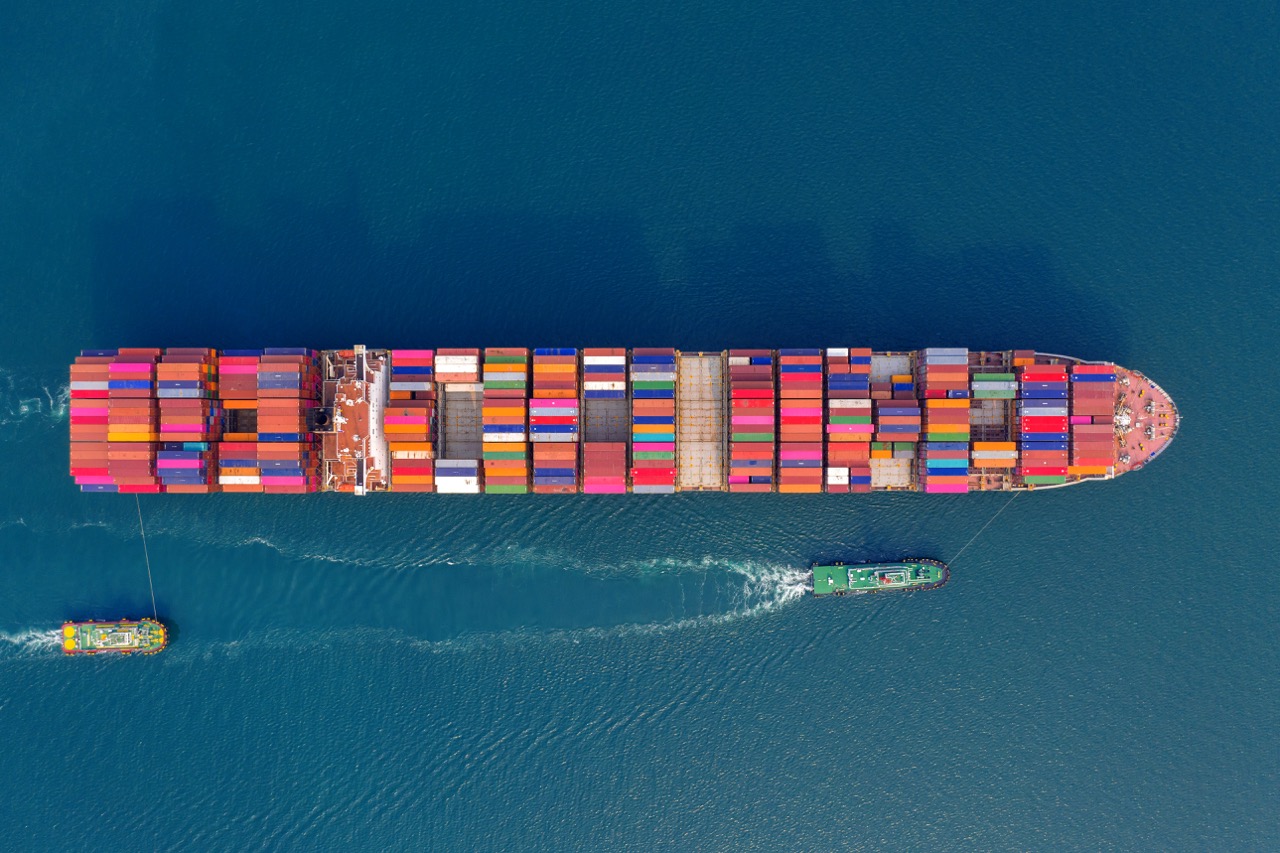
The maritime market is divided into several distinct categories, each representing a specific trade-off in the search for the best yacht charter options.
| Vessel Category | Best For | Operational Constraint | Trade-off |
| High-Performance Sailing | Engagement; tactile feel of the wind. | Heel angle; limited internal volume. | Experience vs. Comfort. |
| Motor Catamaran | Stability; shallow draft; massive beam. | Limited dockage options in old-world ports. | Space vs. Port Access. |
| Explorer/Expedition | Remote regions; toys/subs; autonomy. | Industrial aesthetic; slower speeds. | Capability vs. Sleekness. |
| Classic Refit | Elegance; history; social cachet. | Higher maintenance risk; smaller cabins. | Soul vs. Tech. |
| Ultra-High-Volume (Mega) | Large groups; onboard amenities (spas/gyms). | Requires commercial port docking. | Luxury vs. Intimacy. |
| Performance Motor Yacht | Speed; multiple destinations in one day. | High fuel costs; vibration at speed. | Time vs. Cost. |
Realistic Decision Logic
The decision usually centers on the “anchor-to-port” ratio. If the intent is to stay at anchor in remote bays, the Explorer or Catamaran models excel. If the intent is to be seen in the marinas of Monaco or St. Tropez, a sleek Performance or Mega-yacht is the requisite tool.
Real-World Scenarios and Failure Mode Analysis best yacht charter options
Scenario A: The Multi-Generational Mediterranean Cruise
A family of 12 (ages 8 to 80) wants to tour the Amalfi Coast.
-
Optimal Choice: A high-volume motor yacht with an elevator and a large “beach club.”
-
Failure Mode: Choosing a sailing yacht. The steep stairs and “heeling” while sailing can be dangerous for elderly guests and claustrophobic for children.
-
Constraint: Amalfi ports are notoriously tight; the Captain must have high-level local docking “priority.”
Scenario B: The Expedition to the Svalbard Archipelago
A group of photographers wants to see polar bears and glaciers.
-
Optimal Choice: A Polar Class explorer vessel with “zero-speed” stabilizers and reinforced hull plating.
-
Failure Mode: Using a standard white-boat motor yacht. The lack of ice-hardening and specialized heating systems can lead to mechanical failure in sub-zero waters.
-
Second-Order Effect: Professional ice-pilots must be hired in addition to the standard crew, increasing the “Soft Cost.”
Scenario C: The Shallow-Water Island Hopper (Bahamas)
-
Optimal Choice: A catamaran with a draft under 5 feet.
-
Operational Reality: A deep-draft monohull would have to anchor miles offshore, requiring long, bumpy tender rides to reach the beaches.
-
Risk: Grounding. In the Bahamas, the tide can move quickly, turning a safe anchorage into a trap for a deep-keeled vessel.
Economics of the Sea: Cost Dynamics and Resource Allocation
The “Base Charter Rate” is only the foundation of the financial structure. Navigating the best yacht charter options requires an understanding of the “Plus All” model.
| Expense Component | Percentage of Base Rate | Variability Factors |
| APA (Provisioning) | 30% – 40% | Fuel prices, food/drink specifications. |
| VAT (Value Added Tax) | 5% – 22% | Cruising country (e.g., France vs. Montenegro). |
| Crew Gratuity | 10% – 20% | Discretionary based on service quality. |
| Delivery/Redelivery | Variable | Distance from the yacht’s home berth. |
The Opportunity Cost of “Fixed Rate” Charters
Some smaller catamarans offer “all-inclusive” rates. While this provides budget certainty, it often leads to “incentive misalignment.” The crew may be incentivized to move the boat less to save on fuel, potentially limiting the itinerary. For high-end charters, the variable APA model remains the gold standard for ensuring the crew’s goals are aligned with the guest’s desires.
Strategic Tools and Support Systems
For a charter to function as a “Tier 1” experience, the following support systems must be in place:
-
The Yacht Management Firm: An invisible layer of support that handles the yacht’s accounting, safety compliance (ISM), and technical logistics so the crew can focus on the guests.
-
Global Concierge Integration: The ability to secure a table at “Club 55” or a private tour of a vineyard requires the broker to have local shore-side agents (agents maritimes).
-
Real-Time Weather Routing: Modern yachts use sophisticated software (like PredictWind or Adrena) to plan passages that minimize motion and maximize comfort.
-
SATCOM Infrastructure: For the business traveler, Starlink Maritime has become a non-negotiable requirement for 2026, allowing for high-bandwidth video conferencing in the middle of the ocean.
-
Medical Support (e.g., MedAire): Remote medical tele-presence that provides the crew with doctor-led guidance during an on-board emergency.
-
Security Detail Integration: For high-profile clients, the yacht must have the infrastructure to house and integrate a private security team without disrupting the flow of service.
Risk Landscape and Compounding Failure Modes
A yacht is a closed-loop system. When one component fails, it often triggers a cascade.
-
The “Tender” Failure: If the primary tender (the small boat that takes you to shore) breaks down, the yacht is effectively a gilded cage. You are stuck at anchor.
-
The “Black Water” System Malfunction: A failure in the sewage treatment system on a yacht is a terminal event for a charter. The smell and hygiene issues cannot be mitigated in a mobile environment.
-
Geopolitical “Pivoting”: A sudden change in tax laws or maritime borders (e.g., a “trade war” affecting VAT) can force a yacht to change its cruising grounds 48 hours before a charter.
-
Crew Burnout: In the peak of the Mediterranean season, crews may be on their 5th back-to-back charter. This leads to “service fatigue,” where the attention to detail begins to slip.
Governance, Maintenance, and Long-Term Adaptation
For those who charter multiple times a year, a “Governance” approach to yachting is required.
The Charterer’s Audit
-
[ ] Technical Review: Check the date of the last major refit.
-
[ ] Contractual Review: Ensure the “Cancellation for Cause” clauses include mechanical failure of the air conditioning or stabilizers.
-
[ ] Preference Sheet Maintenance: A living document that tracks the family’s evolving needs—moving from “infant safety” to “teenager water-sports” to “elderly accessibility.”
Monitoring Cycles
Professional brokers should provide a “Mid-Charter Check-in.” This allows for immediate adjustments to the crew’s performance or the itinerary before a small annoyance becomes a systemic failure of the holiday.
Evaluation Metrics: Qualitative and Quantitative Signals
How do you determine if you’ve truly found the “best” option?
-
Leading Indicator (Pre-Charter): The speed and detail of the crew’s response to your preference sheet. A “generic” response is a red flag.
-
Lagging Indicator (Post-Charter): The “Engine Hours to Generator Hours” ratio. If the generators were running 24/7 because the “silent mode” battery bank was dead, the yacht failed its technical promise.
-
Qualitative Signal: The “Chef’s Adaptability.” Can the kitchen pivot from a formal French dinner to an authentic local beach BBQ on two hours’ notice based on a change in the weather?
Common Misconceptions and Strategic Oversimplifications
-
“Sailing is more eco-friendly”: Not necessarily. Many large sailing yachts run their generators 24/7 to power the A/C and winches, burning as much fuel as a mid-sized motor yacht.
-
“I can book directly with the owner to save money”: This is a high-risk move. Without a broker and a MYBA contract, you have zero recourse if the yacht breaks down or the crew is unprofessional.
-
“The Captain is the boss”: Under maritime law, the Captain is the final authority on safety. If the Captain says it’s too rough to cross to Corsica, no amount of money can (or should) change that decision.
-
“All yachts have the same water toys”: Toys (E-foils, Jet Skis, Slides) are often owner-specific. Never assume a yacht has a specific item unless it is explicitly listed on the “Tender & Toys” sheet.
-
“The Mediterranean is always calm in the summer”: The “Mistral” or “Meltemi” winds can ground a fleet for days. A “best” option always includes a “Plan B” land-based itinerary.
Synthesis and Final Editorial Judgment
The search for the best yacht charter options is ultimately a search for a curated environment that defies the limitations of land-based hospitality. It is the only form of travel that offers total geographic fluidity combined with the intimacy of a private home. However, the success of this experience is entirely dependent on the rigor of the pre-charter vetting.
In the current landscape, the most “luxurious” choice is often the most “capable” one. As the world becomes more transparent through data, the value of a yacht that can operate autonomously, safely, and silently becomes the ultimate differentiator. The principal should focus less on the marble in the bathrooms and more on the redundancy of the mechanical systems and the tenure of the crew. A yacht is a machine for living; when that machine is tuned to the specific frequencies of the traveler’s needs, it provides a level of freedom that is unavailable in any other sphere of human movement.