How to Plan Exclusive Events on a Budget: The 2026 Definitive Reference

The landscape of experiential luxury has undergone a profound structural decoupling as of 2026. Historically, the “exclusivity” of an event was tethered almost exclusively to its capital intensity—a direct correlation between spend and status. However, the modern marketplace for high-end gatherings has pivoted toward a mandate for “intellectual and social scarcity.” This transition is driven by a sophisticated tier of attendees who view generic, high-spend opulence as a form of sensory congestion, preferring instead the restorative intersection of intimacy, relevance, and curated immersion.

Planning for such gatherings requires a fundamental departure from the traditional model of “buying” an experience. It necessitates a forensic understanding of how event costs are structured and where margin can be reclaimed without compromising the perceived value of the finish. In an era of rising labor costs and inflationary pressure on prime venues, the ability to engineer “exclusivity” through scarcity, timing, and unbundled services has become the primary marker of a master event strategist. The challenge is no longer merely finding a caterer; it is a matter of logistical sovereignty—the ability to control the environment while mitigating the “middleman” premiums that often inflate budgets by 40% to 60%.

This article serves as a systemic deconstruction of high-end event production under fiscal constraints. We will explore the historical evolution of the “elite gathering,” examine the mental models required to evaluate service integrity, and provide a definitive reference for the operational blueprints that distinguish a world-class event from a standard commercial function. By treating the event as a managed asset rather than a series of invoices, we provide the depth necessary to navigate the complexities of 2026’s luxury experience market.

Understanding “how to plan luxury events on a budget”

The term “budget” is frequently used as a colloquialism for “inexpensive,” but in a professional editorial context, it refers to a specific set of fiscal parameters that demand efficiency. To understand how to plan exclusive events on a budget, one must first recognize that “exclusivity” is a psychological construct, not a financial ultimatum. It is the delta between a guest’s expectations and the reality they encounter. If a guest enters a space that feels culturally or socially restricted, the financial cost of the floral arrangements becomes secondary to the social capital of the invitation.

The Distinction of Curated Scarcity

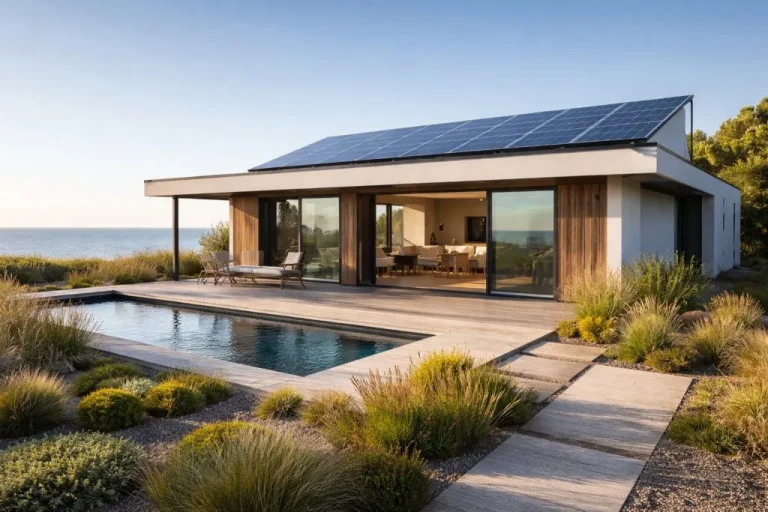
A primary misunderstanding is the belief that exclusivity requires a prime-time, prime-location venue. In 2026, the most authoritative events utilize “non-commercial assets”—private residences, repurposed industrial spaces, or natural environments—that are not available for standard rental. By removing the venue from the “events marketplace,” the planner eliminates the high-margin “event rental tax” and establishes a sense of unique access. This is the cornerstone of budget-conscious exclusivity: shifting the value from the price of the room to the rarity of the room.

The Problem of Bundled Service Premiums

Traditional event planning often relies on full-service agencies that bundle catering, decor, staffing, and technical support. While convenient, this model includes multiple layers of management markups. Mastering the budget-restricted elite event requires “unbundling.” This involves the planner acting as the general contractor, hiring specialized subcontractors directly. The complexity of this approach is higher, but it allows for the reclamation of significant margin, which can then be reinvested into high-impact “anchor” elements like specialized guest speakers or bespoke giftings.

The Psychology of Intentional Intimacy

High-net-worth attendees are increasingly seeking “low-noise” environments. The goal of cost-efficient exclusivity is to trade volume for depth. By reducing the guest list from 200 to 40, the planner can maintain a five-star per-capita spend while keeping the total budget within modest bounds. This “Intimacy Alpha” is often overlooked; a small, perfectly executed gathering in a unique location feels more “exclusive” than a massive gala in a generic hotel ballroom, despite the latter costing ten times as much.

Deep Contextual Background: The Evolution of Elite Gatherings

The trajectory of the exclusive event can be mapped through three distinct phases: the Gilded Age Grandeur, the Institutional Gala, and the modern era of “Stealth Luxury.”

The Gilded Age Grandeur (Late 19th Century)

The original “exclusive events” were the private balls of the Astors and Vanderbilts. These were defined by total self-sufficiency; the events took place in private homes with private staff. There was no “event industry” to charge markups. Exclusivity was a function of lineage and the physical capacity of the ballroom. This was an era of high-visibility spend, where the objective was to demonstrate the lack of budget constraints.

The Institutional Gala Phase (1950s–1990s)

As society decentralized, exclusivity moved into the public sphere. The charity gala and the museum fundraiser became the primary theaters of social status. This era birthed the professional “event planner” and the “event venue.” Exclusivity was sold as a ticket price. This period also saw the standardization of the “event package”—the rubber-chicken dinner and the generic floral centerpiece—leading to a “commodity trap” where spend was high but authentic exclusivity was low.

The Era of Stealth Luxury (2020s–2026)

Following the global shifts of the early 2020s, the market has pivoted toward “Private-Use” enclaves. The dominant trend in 2026 is the rejection of the “public-private” venue in favor of sites that offer “Operational Sovereignty.” Planners are now looking for ways to bypass the institutional markups of the hospitality industry. This phase is characterized by a desire for intellectual scarcity—events that offer access to ideas or people that cannot be bought via a standard ticket.

Conceptual Frameworks and Mental Models

To effectively navigate the production of a high-end event under constraints, one must utilize mental models that prioritize systemic efficiency.

1. The Anchor-Filler Model

This model posits that a guest’s memory of an event is dictated by one or two “peak” moments rather than the average of the whole experience.

  • The Anchor: A high-impact, high-spend element (e.g., a Michelin-starred chef or a performance in a unique setting).

  • The Filler: High-quality but lower-cost components (e.g., minimalist decor or a focus on ambient sound rather than complex AV). By allocating 60% of the budget to a single Anchor and 40% to efficient Fillers, the event achieves an “Exclusivity Index” far higher than its actual spend would suggest.

2. The Social Density Framework

Exclusivity is inversely proportional to the ease of entry. This framework evaluates the event based on the “Friction of the Invitation.” By introducing non-monetary barriers—such as an application process, a specific referral, or a requirement for a specific professional or intellectual background—the planner increases the perceived value. This allows for a reduction in physical spend, as the guests themselves become the primary “amenity” of the event.

3. The “Unbundled Logistics” Loop

This is the operational engine of budget control. It involves breaking every service into its raw components: labor, materials, and management. To reduce fees, the planner provides the “Management” layer and sources the “Materials” (e.g., renting high-end glassware from a warehouse rather than through a caterer). This reclamation of the middleman’s margin is the only way to achieve five-star results on a three-star budget.

Key Categories or Variations

Exclusive events on a budget fall into several distinct typologies, each requiring a specific strategy for margin protection.

Category Primary Value Cost Efficiency Strategic Trade-off
The “Found Space” Salon Intellectual Access High Requires extensive “clean-up” labor.
The Agricultural Long-Table Sensory Authenticity Moderate Susceptible to weather volatility.
The Off-Grid Retreat Total Seclusion Low (per-capita) High logistical complexity (power/water).
The “Digital-Dark” Supper Relational Focus High High friction for guests (no phones).
The Branded “Pop-Up” Cultural Relevance Moderate Requires high-tier marketing coordination.
The Private-Asset Galley Architectural Status High Requires “sovereign access” to a home/yacht.

Decision Logic: The “Asset vs. Service” Choice

When you look at how to plan exclusive events on a budget, the primary decision point is the trade-off between “Hard Assets” (the venue) and “Soft Services” (the experience). An incredible venue can compensate for simple food, but incredible food can rarely compensate for a mediocre, generic venue. The authoritative move is to spend on the context and save on the content.

Detailed Real-World Scenarios

Scenario 1: The “Non-Commercial” Art Studio Salon

A luxury brand wants to host 30 influencers for a launch but has a limited budget.

  • The Strategic Move: Renting a working artist’s loft in a gritty neighborhood rather than a sterile hotel suite.

  • Budget Saving: The “loft” is rented at a studio rate rather than an “event” rate (a 70% saving).

  • Exclusivity Gain: Guests feel they are “behind the scenes” of a creative space. The unpolished nature of the venue makes the polished nature of the product stand out.

  • Second-Order Effect: The brand builds a relationship with the local arts community, adding “Cultural Capital” that money cannot buy.

Scenario 2: The “Provisioned” Estate Dinner

A family office wants to host a high-level networking dinner for 12 principals.

  • The Strategic Move: Utilizing a principal’s private residence but hiring an independent “Provisioning Specialist” instead of a catering firm.

  • Budget Saving: Buying high-end ingredients and wines at retail/wholesale and hiring a chef and two servers at a day-rate. This eliminates the 30% food markup and 20% “administrative fee.”

  • Exclusivity Gain: The private home environment creates a level of trust and candor that a restaurant cannot replicate.

  • Risk: The “Principal’s Liability” requires a specific one-day insurance rider, which is a small but critical fixed cost.

Scenario 3: The “Off-Grid” Lighthouse Sunset

A corporate board needs a 4-hour high-impact meeting and dinner.

  • The Strategic Move: A remote lighthouse accessible only by a short boat ride.

  • Budget Saving: Simple “cold-prep” gourmet food (charcuterie, aged cheeses, chilled seafood) that requires no on-site kitchen.

  • Exclusivity Gain: The “Maritime Barrier” ensures total privacy. The logistical difficulty of reaching the site becomes part of the “legend” of the event.

Planning, Cost, and Resource Dynamics

The financial profile of high-end events is characterized by a “Veblen Effect”—where price is often used as a signal of quality. To bypass this, the planner must manage the “Total Cost of Experience” (TCE).

Direct vs. Indirect Costs

The direct cost of the event is the check written to the vendor. The indirect cost—and the one that often destroys budgets—is the “Coordination Tax.” This is the time lost in miscommunication or the cost of hiring a second vendor to fix the first one’s mistakes. To plan on a budget, one must invest “Time Capital” to reduce “Cash Capital.”

Per-Capita Weekly Cost Comparison (Estimated 2026 USD)

Component Professional Agency Unbundled Sovereign Efficiency Catalyst
Venue $5,000 – $15,000 $1,500 – $3,000 Using “Non-Event” spaces.
Catering (pax) $250 – $450 $120 – $180 Direct-to-Chef hiring.
Beverage $80 (pkg) $40 (retail) Buy-back or Wholesale sourcing.
AV/Tech $3,000 (standard) $800 (niche) Utilizing “Natural Light/Acoustics.”
TOTAL (50 pax) $22,000 – $45,000 $9,500 – $15,000 ~60% Savings

Tools, Strategies, and Support Systems

  1. The “Provisioning” Fixer: Hiring a local with deep market knowledge to source “wholesale-plus” beverages and ingredients.

  2. Staff-Direct Platforms: Using specialized staffing apps to hire experienced waitstaff at a day-rate rather than through an agency that takes a 40% cut.

  3. The “Rental Warehouse” Account: Opening a direct account with commercial rental houses rather than through a decorator.

  4. Natural Lighting Strategy: Timing events to utilize the “Golden Hour,” eliminating the need for complex and expensive lighting rigs.

  5. The “Single-Flower” Aesthetic: Using high volumes of a single, seasonal flower (e.g., all white tulips) rather than complex, multi-floral arrangements. This creates a high-luxury “architectural” look at a fraction of the cost.

  6. Dynamic RSVP Apps: Using tools that manage waitlists to ensure 100% capacity, maximizing the ROI on fixed costs like venue and staff.

Risk Landscape and Taxonomy of Failure

The primary risk in budget-conscious exclusivity is “Visible Compromise.” If the guest sees where the money was saved, the illusion of exclusivity is shattered.

1. The “Staff-to-Guest” Threshold Failure

This is the most common failure point. Saving on staffing leads to slow drink service or uncleared plates. Exclusivity is a “high-touch” experience; if you reduce the staff, you must simplify the service model (e.g., move from “plated” to “highly-managed family style”) to ensure the speed remains high.

2. The “Infrastructure Shock” Risk

Utilizing a “found space” (like a loft or studio) carries the risk of power failures or inadequate restroom facilities. A budget event that fails on basic sanitation or climate control ceases to be “exclusive” and becomes “unprofessional.”

3. The “Curation Drift”

Attempting to save money by letting “plus-ones” attend or opening the guest list to lower-tier prospects dilutes the social scarcity. The “hidden fee” of a cheap event is a loss of brand prestige.

Governance, Maintenance, and Long-Term Adaptation

For organizations or individuals who host recurring events, a governance model is essential.

The “Post-Event Synthesis”

Within 7 days of the event, the planner should conduct a “Waste Audit.” Did the group drink all the wine? Was 30% of the food thrown away? This data allows for the “Normalization” of future budgets.

Layered Maintenance Checklist

  • 90 Days Out: Secure the “Non-Commercial” venue and verify power/water capacity.

  • 60 Days Out: Finalize the “Anchor” element and deposit.

  • 30 Days Out: Lock in the “Direct-Hire” staff and Provisioning list.

  • 48 Hours Out: On-site “Friction Walk-through”—identifying any visible budget compromises and fixing them.

Measurement, Tracking, and Evaluation

Evaluation of trip success is more than just “Did people have fun?” It is about “Value Capture.”

  • Leading Indicator: The “Response Velocity” of the invitations. (Indicating the perceived social capital of the event).

  • Lagging Indicator: The “Post-Event Mentions” in target circles. (Did the event create a “legend”?).

  • Qualitative Signal: The “Length of Stay”—exclusive, comfortable events result in guests staying 20-30% longer than expected.

Common Misconceptions and Oversimplifications

  • Myth: “Exclusive means expensive.” Correction: Exclusive means “restricted.” Restriction can be achieved through intellectual barriers just as effectively as financial ones.

  • Myth: “You need a planner to get the best deals.” Correction: A planner provides convenience. A “Sovereign Coordinator” (you) gets the best deals by doing the unbundling yourself.

  • Myth: “More food is better luxury.” Correction: In 2026, high-end guests prefer “Curated Plates” with high nutritional value over “Glutinous Abundance.”

  • Myth: “Open Bar is the only way.” Correction: A “Curated Pairing” or a “Single-Signature Cocktail” model is often perceived as more sophisticated and exclusive than a generic open bar.

Ethical, Practical, or Contextual Considerations

As of 2026, the “Ethical Event” is a growing trend. Groups are increasingly sensitive to food waste and the “carbon footprint” of their gatherings. Planning on a budget often aligns perfectly with these ethics; sourcing locally, reducing plastic, and utilizing “found spaces” rather than purpose-built, high-energy venues provides a “Moral Exclusivity” that high-net-worth guests find increasingly attractive.

Conclusion

Mastering how to plan exclusive events on a budget is an exercise in the architectural management of perception. It requires moving away from the passivity of the commercial client and into the proactive role of the logistical engineer. By leveraging social scarcity, utilizing non-commercial assets, and unbundling service chains, a planner can access a level of opulence that far exceeds the sum of their individual invoices. The luxury of 2026 is found in the ability to control the “cognitive environment” of the guest, and for the strategist, that control is most effectively bought through the smart utilization of time, taste, and direct procurement.

Similar Posts