Deep Heritage: A Definitive Guide to Cultural Travel Ideas America
The United States is often categorized by its geographic scale or its economic output, yet its most profound complexity lies in its cultural density—a layering of indigenous deep time, colonial persistence, and subsequent waves of global migration. Cultural Travel Ideas America. For the serious traveler, moving beyond the utilitarian aspects of transit and lodging requires a shift in focus toward these cultural strata. Engaging with the American landscape through a cultural lens necessitates an understanding that “culture” is not a static exhibit but a living, breathing negotiation of identity, memory, and geography.
This analysis moves away from the superficiality of list-based travel recommendations to explore the systemic frameworks that define the American cultural experience. From the linguistic enclaves of the Gullah Geechee coast to the high-desert modernism of the Southwest, cultural travel in America is an exercise in deconstructing the “melting pot” myth in favor of a more nuanced “mosaic” model. By examining the historical trajectories, ethical boundaries, and operational risks of such journeys, we can develop a more robust methodology for navigating the diverse social topographies of the continent.
To achieve topical mastery in this field, one must recognize that cultural travel ideas in America are not merely about destinations; they are about the intersections of people and place. Whether it is the reclamation of heritage in Appalachia or the avant-garde expressions of urban centers, the goal is to foster a type of literacy—an ability to read the landscape for its hidden histories and contemporary tensions. This article serves as a definitive reference for that pursuit, providing the conceptual and practical tools necessary for deep, informed exploration.
Understanding “cultural travel ideas america”
At its core, a robust cultural travel ideas america framework must distinguish between “consumption” and “engagement.” The oversimplification of American culture often leads travelers to treat complex communities as background scenery or museum-quality relics. Real cultural travel involves a multi-perspective understanding: the recognition that a single location—like a Civil War battlefield or a Navajo trading post—holds radically different meanings for different stakeholders.
Common misunderstandings in this sector often revolve around the idea of “authenticity.” Many travelers seek a version of America that is “untouched,” failing to realize that all culture is inherently adaptive. A “genuine” experience in the Mississippi Delta, for example, is not found by looking for a frozen-in-time juke joint, but by observing how the blues legacy continues to evolve in contemporary social and economic contexts. The risk of oversimplification is highest when we rely on binary labels (e.g., “urban vs. rural” or “modern vs. traditional”) that ignore the fluidity of American life.
To navigate this landscape effectively, we must adopt a systemic view. Cultural travel ideas in America are most potent when they connect disparate dots—linking, for instance, the migration patterns of the 20th century to the culinary landscapes of modern Chicago or Detroit. This requires a level of intellectual honesty and patience, as the most profound cultural insights often occur in the “negative space” between major landmarks, in the mundane interactions and local vernaculars that define daily life.
Deep Contextual Background: Historical and Systemic Evolution
The evolution of cultural tourism in America can be traced through three distinct phases. The first, which we might call “Elite Heritage” (1880s–1940s), focused on the preservation of a specific Eurocentric narrative. This era saw the rise of the “Grand Tour” mindset adapted to the American West, where the Northern Pacific Railway marketed the “Wonderland” of Yellowstone and the “noble” archetypes of indigenous peoples to a wealthy, coastal audience. Culture was a spectacle to be viewed from the safety of a Pullman car.
The second phase, “The Mass Mosaic” (1950s–1990s), followed the democratization of travel via the Interstate Highway System. This period popularized the “road trip” as a cultural ritual in itself. It was during this time that regional identities—the kitsch of Route 66, the folk revivals of the Smokies—were codified and marketed to a broad middle class. However, this phase often relied on sanitized versions of history, frequently omitting the struggles of marginalized groups and the environmental costs of rapid tourism development.
Today, we are in a phase of “Critical Immersion” (2000s–Present). This era is defined by a desire for transparency, inclusivity, and “co-creation.” Modern cultural travel is increasingly driven by a desire to confront the “difficult histories” of the United States—slavery, displacement, and labor struggles—while simultaneously celebrating the resilience and innovation of diverse communities. This shift from “sightseeing” to “insight-seeking” has turned the traveler into a participant in the ongoing dialogue of American identity.
Conceptual Frameworks for Cultural Literacy
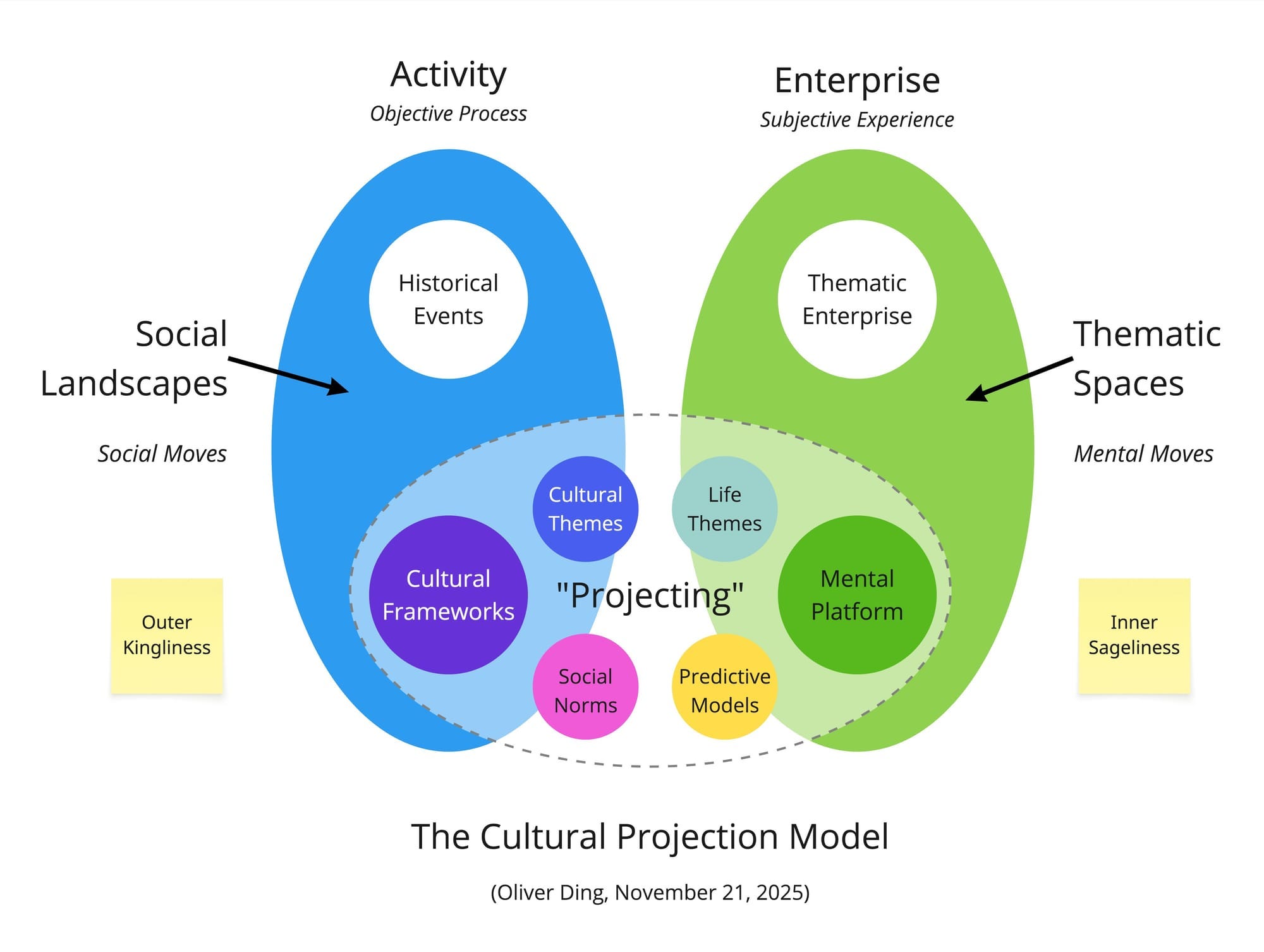
To move beyond surface-level observations, travelers can utilize specific mental models to evaluate cultural travel ideas in America.
1. The Stratigraphic Model
This framework treats culture like geological layers. To understand a city like New Orleans, one must look at the indigenous foundation, the French and Spanish colonial layers, the West African and Caribbean influences, and the post-Katrina modern layer. A successful journey involves “drilling down” through these strata rather than just skimming the surface.
2. The Interaction vs. Observation Matrix
This model measures the level of agency the traveler has in the cultural space. Observation (attending a Broadway show) has low friction but also lower personal transformation. Interaction (participating in a Gullah basket-weaving workshop) requires higher effort and ethical awareness but yields a deeper understanding.
3. The Push-Pull Heritage Model
Cultural sites often exist in a tension between “pushing” a narrative (official monuments, state-sponsored history) and “pulling” a counter-narrative (local oral histories, independent art spaces). A literate traveler seeks the tension between these two, knowing that the “truth” usually lies in the friction.
Key Categories and Variation Models
American cultural travel can be categorized by the “functional driver” of the experience. Each category offers a different trade-off between accessibility and depth.
| Category | Primary Focus | Typical Trade-off | Success Metric |
| Living History | Immersive recreation (e.g., Colonial Williamsburg) | Can feel sanitized or performative | Educational retention |
| Urban Ethno-Centers | Contemporary immigrant enclaves (e.g., Houston’s Asiatown) | Logistical complexity, language barriers | Culinary and social “fluency.” |
| Indigenous Sovereignty | Native-led tourism (e.g., Navajo Nation, Taos Pueblo) | Strict protocols, remote locations | Ethical alignment/Respect |
| Artistic Avant-Garde | Modern creative hubs (e.g., Marfa, TX; Miami’s Wynwood) | High cost, perceived pretension | Aesthetic inspiration |
| Civil Rights/Justice | Confronting difficult history (e.g., Selma, AL; Manzanar) | Emotional weight, heavy subject matter | Civic/Ethical reflection |
| Rural Americana | Folk traditions, agrotourism (e.g., Vermont, Ozarks) | Slower pace, limited modern amenities | Connection to land/tradition |
Realistic Decision Logic
The choice of category depends on the traveler’s “Emotional Bandwidth.” If the goal is intellectual stimulation without high emotional stress, Living History or Artistic Avant-Garde are optimal. However, if the goal is profound social empathy, the Civil Rights or Indigenous Sovereignty categories provide a much higher return on investment, provided the traveler is willing to navigate the inherent complexities and protocols of those spaces.
Detailed Real-World Scenarios
Scenario 1: The “Great Migration” Road Trip
-
Scenario: A traveler follows the route from the Mississippi Delta to Chicago to understand the evolution of blues and gospel.
-
Constraints: Budget limits; need for a reliable vehicle; timing visits to align with music festivals.
-
Failure Mode: Focusing only on the music venues and ignoring the socio-economic conditions (housing, labor) that forced the migration.
-
Second-Order Effect: By visiting the labor museums in Chicago alongside the blues clubs, the traveler gains a holistic view of African American resilience rather than just an aesthetic appreciation of the music.
Scenario 2: The Southwest Adobe & Modernism Circuit
-
Scenario: Visiting Santa Fe’s art markets and then traveling to the Georgia O’Keeffe Ghost Ranch.
-
Decision Point: Choosing between a state-run museum and an independent, indigenous-run gallery.
-
Operational Risk: Misunderstanding tribal protocols at Taos Pueblo leads to a disrespectful interaction.
-
Resolution: Success is found by hiring a local indigenous guide who can translate the “unwritten rules” of the community, turning a potential failure into a bridge-building experience.
Planning, Cost, and Resource Dynamics
Cultural travel in America often has hidden costs that aren’t reflected in hotel rates.
| Resource | Direct Cost (Range) | Opportunity Cost | Variability Factor |
| Guided Interpretation | $150–$500/day | Loss of “discovery” vs. gain in accuracy | Quality of the guide |
| Community Events | $20–$100 | Time spent in transit to remote areas | Seasonal availability |
| Specialized Lodging | $200–$800/night | Higher price for “historic” status | Location-based demand |
| Culinary Immersion | $50–$200/day | Choosing a “local” spot over a “famous” one | Regional price index |
Direct costs are manageable, but the true investment is in Time. Cultural travel ideas: America cannot be rushed; a 2-day trip to New Orleans will only ever yield a surface-level “Bourbon Street” experience. To reach the cultural core, one must invest in a 5–7 day stay, allowing for the “soak time” necessary to observe the city’s actual rhythms.
Support Systems and Strategic Resources

A successful deep-dive into American culture requires a specialized toolkit:
-
State Humanities Councils: Every state has one; they often fund the most accurate local history trails and digital archives that don’t appear in commercial guidebooks.
-
UNESCO Creative Cities Network: US cities like Paducah, KY (Crafts) or Kansas City, MO (Music) provide structured ways to engage with specific cultural outputs.
-
National Park Service (NPS) Cultural Sites: Beyond the “Big Parks,” the NPS manages National Historic Sites (e.g., Tuskegee Airmen, Harriet Tubman), which are the gold standard for factual interpretation.
-
Local “Little” Libraries and Bookstores: In cultural hubs like Asheville or Portland, these are the true community centers where you can find self-published local histories.
-
Indigenous-Led Platforms: Sites like the American Indian Alaska Native Tourism Association (AIANTA) are essential for finding ethical, community-approved experiences.
The Risk Landscape: Misappropriation and Erosion
The primary risks in cultural travel are not physical, but ethical and intellectual.
-
Cultural Misappropriation: Taking “souvenirs”—both physical and digital—without understanding their sacred or social context. This is particularly prevalent in the Southwest and Hawaii.
-
Gentrification Tourism: When travelers only visit the “cool” revitalized parts of a city (e.g., East Austin or North Brooklyn), they may inadvertently contribute to the displacement of the very culture they claim to admire.
-
Narrative Flattening: The tendency to accept a single “official” story of a place, thereby erasing the voices of those who were excluded from the history books.
Mitigating these risks requires a “Vigilance Framework”: constantly asking, “Who is telling this story?” and “Who benefits from my presence here?”
Governance and Long-term Adaptation
For the perennial traveler, cultural literacy must be maintained through a “Review Cycle.”
-
The 3-Year Revisit Rule: Culture changes rapidly. Revisiting a hub like Atlanta or San Francisco every few years allows you to see how the “social fabric” is re-weaving itself.
-
Ethics Monitoring: Stay informed on local land-rights issues or social movements in your favorite destinations. This allows you to adjust your travel patterns to support communities that are struggling with overtourism or displacement.
-
The Adaptation Checklist:
-
Pre-Trip: Have I read a book by a local author from this community?
-
During: Am I spending at least 50% of my budget at locally-owned, non-chain businesses?
-
Post-Trip: How has my understanding of the “American Story” changed?
-
Measurement and Success Indicators
How do we quantify the success of a cultural engagement?
-
Leading Indicators: The amount of time spent in “non-tourist” zones; the number of books read before arrival; the percentage of “community-led” experiences booked.
-
Lagging Indicators: The shift in the traveler’s own social biases; the ability to explain a complex local issue to others; the duration of relationships built with local hosts.
-
Documentation Examples:
-
The Narrative Log: Not just a “photo dump,” but a journal of conversations and observations.
-
The Social Map: A record of the different “interest groups” or “cliques” observed in a city.
-
Common Misconceptions and Oversimplifications
-
Myth: American culture is “young” and therefore “shallow.” (Reality: Indigenous culture in America is tens of thousands of years old; colonial history is five centuries deep.)
-
Myth: The best culture is in NYC or LA. (Reality: Some of the most profound cultural innovations are happening in the “Middle”—in the Rust Belt, the Great Plains, and the rural South.)
-
Myth: “Tourism” is inherently bad for culture. (Reality: When managed by the community, tourism can be a powerful tool for linguistic and artistic revitalization.)
-
Myth: You need a big budget for cultural travel. (Reality: Some of the most significant cultural experiences—public parades, street art, community lectures—are free.)
Conclusion
The pursuit of cultural travel ideas in America is ultimately a pursuit of national self-knowledge. In a country as vast and polarized as the United States, travel serves as a vital connective tissue, allowing us to see the “other” not as a caricature, but as a co-creator of a shared reality. By applying rigorous mental models and ethical frameworks to our journeys, we can transform travel from an act of consumption into an act of citizenship.
The American landscape is never “finished.” It is a constant improvisation, a series of cultural travel ideas in America that are being rewritten every day by those who live in it and those who move through it. The definitive traveler remains curious, humble, and willing to listen to the whispers of the past as much as the shouts of the present.