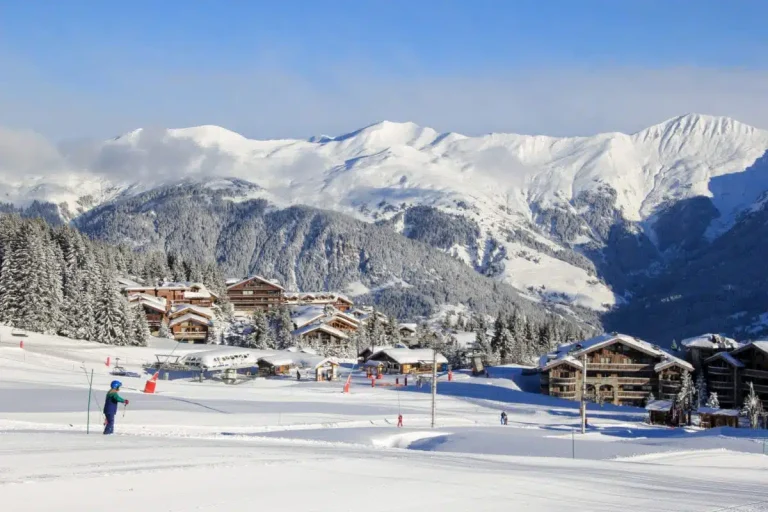
Best City Escapes United States: A Definitive 2026 Editorial Reference
The concept of the “city escape” in the United States has undergone a profound structural revaluation as of 2026. Historically, these excursions were characterized by a simple desire for proximity to nature—a brief weekend reprieve from the industrial or commercial density of metropolitan hubs. However, the modern American traveler now approaches the urban exit with a more sophisticated set of requirements. The escape is no longer merely a change in scenery; it is an intentional pursuit of “environmental recalibration,” where the proximity of the destination to a major secondary airport, the robustness of local digital infrastructure, and the authenticity of the “micro-local” culture are scrutinized with the same rigor as a primary residence.
This evolution is driven by the decentralization of the American workforce and a deepening awareness of the “cognitive load” imposed by primary urban centers. When we evaluate the most prestigious urban-adjacent retreats, we find they are characterized by a “low-friction” transition. The objective is to achieve a state of seclusion without the logistical fragility often associated with deep-wilderness travel. This necessitates a delicate balance between the “Hard Goods”—the architecture and natural landscape—and the “Soft Goods”—the service standards and accessibility.
Analyzing the landscape of American retreats requires moving past the superficial allure of listicles and into the systemic factors that sustain a destination’s appeal. Whether it is the maritime enclaves of the Northeast, the high-desert sanctuaries of the Southwest, or the temperate rainforests of the Pacific Northwest, each region offers a distinct value proposition that appeals to specific psychological and operational needs. By treating the city escape as a managed transition rather than a spontaneous trip, we can better understand the nuances of the 2026 domestic travel market.
Understanding “best city escapes united states”
To effectively categorize the best city escapes united states, one must first address the linguistic dilution of the term “escape.” In the broader hospitality market, any hotel located two hours from a city may claim this title. However, from an editorial and systemic perspective, a true “authority” escape must satisfy a triad of criteria: geographic distinctiveness, operational isolation, and cultural sovereignty.
The Distinction of Technical Seclusion
A primary misunderstanding is the belief that an escape is defined by distance. In reality, some of the most effective retreats are geographically close to urban centers but utilize topographical features—such as islands, canyons, or mountain ridges—to create a sense of profound psychological distance. The “escape” is a function of the transition, not the mileage. An authoritative retreat manages the “threshold experience,” ensuring that as soon as the traveler leaves the primary highway, the sensory inputs (noise, light, pace) shift dramatically.
The Complexity of Infrastructure Parity
One of the most significant risks in the modern escape market is the “infrastructure gap.” Travelers often seek the aesthetic of a remote cabin but require the digital reliability of a Midtown office. The best city escapes in the country are those that have solved this paradox. They provide “stealth tech”—high-speed satellite connectivity and climate-controlled environments integrated into structures that appear rustic or historically significant. A failure in this parity—where the guest finds themselves in a “dead zone” while needing to manage a global team—turns a restorative escape into a source of acute stress.
The Role of Cultural Sovereignty
The best city escapes united states are those that do not attempt to replicate urban amenities in a rural setting. Instead, they leverage the “sovereignty” of their location. This involves sourcing local materials, utilizing regional culinary traditions, and respecting the pace of the local community. A retreat that feels like a “Manhattan hotel moved to the mountains” is a failure of the category. The objective is to provide an alternative reality, not a curated version of the one the guest just left.
Deep Contextual Background: The Evolution of the American Weekend
The trajectory of the American escape can be mapped through three distinct phases: the Gilded Age Grandeur, the Post-War Motorization, and the modern era of Digital Seclusion.
The Gilded Age Grandeur (Late 19th Century)
The original “escapes” were the private enclaves of the industrial elite—estates in Newport, Rhode Island, or the “Great Camps” of the Adirondacks. These were not public hotels but private compounds designed to house entire families and their staffs for months at a time. They established the “Adirondack Style” and the “Maritime Shingle” aesthetic that still defines luxury retreats today. The “plan” was total self-sufficiency.
Post-War Motorization and the “Second Home” (1950s–1990s)
The expansion of the Interstate Highway System democratized the escape. The “weekend getaway” became a middle-class staple, leading to the rise of regional hubs like the Catskills in New York, the Poconos in Pennsylvania, and the Lake Districts of the Midwest. This era was characterized by a “recreational” focus—skiing, boating, and hiking. The luxury market during this time focused on the “Resort Hotel” model, providing high-volume amenities in scenic locations.
The Digital Seclusion Era (2010s–2026)
Following the “great decentralization” of the early 2020s, the escape has become more frequent and more integrated into the work-life cycle. The “weekend” has expanded into the “work-from-anywhere” sabbatical. This has led to the emergence of ultra-niche, boutique properties—often with 20 keys or fewer—that prioritize privacy, architecture, and wellness over high-volume social scenes. The best city escapes united states in 2026 are those that cater to this new “sovereign traveler” who values time and focus over status and spectacle.
Conceptual Frameworks and Mental Models
To evaluate the efficacy of an urban-adjacent retreat, we employ several mental models that look beyond the marketing copy.
1. The Frictionless Transition Model
This model evaluates an escape by the “Time-to-Rest” (TTR). It measures the duration between leaving the office/residence and achieving a state of physiological relaxation. A retreat that requires a flight, a three-hour drive, and a ferry may have beautiful scenery, but its TTR is too high for a standard 48-hour escape. The best escapes are those with a TTR of under three hours.
2. The Ratio of Isolation to Access
This framework measures a retreat’s value based on its “curated remoteness.” The goal is to feel completely isolated from civilization while remaining 20 minutes away from a trauma center or a high-quality local market. The more a property can minimize the “visibility of the outside world” while maintaining “access to its services,” the higher its market position.
3. The Biophilic Integration Index
This model assesses how the architecture interacts with the local ecology. Does the building follow the contours of the land? Does the lighting design minimize light pollution? High-tier American escapes are now judged on their “ecological humility”—the ability to provide extreme luxury without appearing as an intrusive “monolith” on the landscape.
Key Categories of Escapes and Strategic Trade-offs
The American escape market is segmented into several distinct typologies, each requiring a different operational focus.
| Category | Primary Value | Key Staff Role | Strategic Trade-off |
| The Mountain Estate | High Altitude/Cooling | Guide/Naturalist | High seasonal volatility; snow risk. |
| The Desert Sanctuary | Silence/Geology | Wellness Director | Intense heat; water scarcity issues. |
| The Coastal Enclave | Maritime/Seafood | Harbor Master | High humidity; erosion/storm risk. |
| The Island Retreat | Hard Seclusion | Logistics Manager | Difficult access; supply chain fragility. |
| The Agricultural Stay | Gastronomy/Nature | Farm Manager | Potential farm “smells”/noise; rustic vibe. |
| The Forest Cabin | Privacy/Biophilia | Arborist/Security | Limited views; potential for fire risk. |
Decision Logic: The “Micro-Season” Choice
When choosing among the best city escapes united states, the sophisticated traveler must look at the “micro-season.” For example, the desert of Joshua Tree is a premier escape in October, but a liability in July. Conversely, the Maine coast is iconic in August but can be operationally “dark” in February. The strategic choice is finding the destination where the local climate provides the most “restorative delta” compared to the guest’s home environment.
Detailed Real-World Scenarios
Scenario 1: The High-Pressure NYC Exit
An executive in Midtown needs to leave on Friday afternoon for a total reset but must return by Sunday evening for a 7:00 AM flight.
-
The Choice: A boutique estate in the Hudson Valley or the Litchfield Hills of Connecticut.
-
The Logic: These locations offer a “TTR” of under two hours. The guest can be in a state of deep nature by 6:00 PM on Friday.
-
Failure Mode: Choosing the Hamptons during peak summer. The traffic on the Long Island Expressway can extend the TTR to five hours, negating the restorative benefits of the destination.
Scenario 2: The “Deep Focus” LA Sabbatical
A writer or strategist in Los Angeles needs four days of total silence to finish a project.
-
The Choice: A high-desert retreat in Ojai or the Santa Ynez Valley.
-
The Requirement: The retreat must have “zero-noise” policies and private outdoor workspace.
-
Second-Order Effect: By choosing a desert environment, the guest reduces “sensory noise”—the visual complexity of a forest or city—allowing for higher cognitive focus.
Scenario 3: The Multi-Generational Bay Area Retreat
A family of ten (ages 5 to 75) wants a weekend away from San Francisco.
-
The Choice: A large-scale agricultural estate in Sonoma or Napa.
-
The Decision Point: Does the property offer “contiguous luxury”—villas or cottages that are close enough for shared meals but far enough apart for individual privacy?
-
Constraint: The elder generation requires accessibility (no steep stairs), while the children require “safe roaming” (fenced pool/gardens).
Planning, Cost, and Resource Dynamics
The financial profile of the best city escapes united states is increasingly driven by “dynamic scarcity.” By 2026, the cost of a high-end weekend retreat has risen significantly as urban residents seek “managed nature.”
Direct and Indirect Costs
-
The “Premium Proximity” Tax: Escapes within two hours of a Tier-1 city (NY, LA, SF, Chicago) command a 30-40% premium over those three hours away.
-
Opportunity Cost: The time spent in transit is a direct loss of vacation value. For a high-income individual, saving two hours of traffic is worth a $500-1,000 premium on the room rate.
-
The “Supply Chain” Surcharge: Remote island or mountain retreats often have 20-30% higher Food & Beverage costs due to the “final mile” logistical challenges.
Cost Range Table (2026 USD)
| Escape Tier | Nightly Rate (King) | Average Weekend Total | Key Service Level |
| Ultra-Boutique (5-10 rooms) | $1,200 – $2,500 | $3,500 – $6,000 | 1:1 Staff Ratio; private chef. |
| Premium Lodge (20-50 rooms) | $800 – $1,200 | $2,500 – $4,000 | Full-service spa; on-site dining. |
| Luxury Cabin/Rental | $600 – $1,000 | $2,000 – $3,500 | High privacy; self-service focus. |
Tools, Strategies, and Support Systems
-
“Go-Bag” Logistics: Sophisticated escape-seekers maintain a pre-packed kit for specific environments (mountain vs. beach) to reduce the “planning friction.”
-
Preferred Member Access: Utilizing programs like Amex Fine Hotels & Resorts or Virtuoso to secure “noon check-in” and “4:00 PM checkout,” which effectively adds a full day to a 48-hour escape.
-
Satellite Reliability Audits: Checking “Starlink” performance maps for a destination before booking if professional connectivity is non-negotiable.
-
Private Aviation Links: Utilizing semi-private shuttle services (e.g., JSX or Wheels Up) to bypass primary commercial terminals for regional hops (e.g., Dallas to Aspen).
-
The “Ghost” Grocery Strategy: Arranging for a local delivery service to stock a private rental 2 hours before arrival, ensuring the “TTR” starts the moment the door opens.
Risk Landscape and Taxonomy of Failure
The risks inherent in a city escape are often “environmental” rather than operational.
1. The “Infrastructure Shock” Risk
A traveler moves from a climate-controlled city apartment to a mountain cabin that loses power in a storm. Without a backup generator, the “luxury” experience vanishes instantly. The best city escapes united states are those with “Tier-4” infrastructure redundancy.
2. The “Social Drift” Risk
A secluded retreat becomes “trendy” on social media, leading to an influx of day-trippers who destroy the silence. An authoritative escape manages this by “locking” the property to guests only and maintaining high-privacy perimeters.
3. The “Ecological Exposure” Failure
Guests seeking “nature” are often unprepared for its reality—insects, wildlife, or severe weather. A failure in “Expectation Management” at the booking stage leads to a negative experience. The hotel must provide “Environmental Conditioning”—briefing guests on what to expect and providing the necessary gear (boots, repellents, jackets).
Governance, Maintenance, and Long-Term Adaptation
How does a retreat remain at the top of the market for decades? It requires a “Stewardship Model” rather than a “Hospitality Model.”
The “Silent” Maintenance Cycle
Luxury retreats in rugged environments face accelerated physical depreciation. Salt air, extreme sun, and heavy snow loads degrade assets. The best properties have a “Rolling Refresh” where two rooms are taken out of service every month for deep maintenance, ensuring the entire property is never “tired.”
Layered Review Checklist for Escape Governance
-
Daily: Soundscape monitoring (ensuring no construction or mechanical noise).
-
Monthly: Digital “vulnerability” check (ensuring Wi-Fi is stable and secure).
-
Quarterly: Local “Impact” audit (checking the property’s relationship with the local community/environment).
-
Annually: Structural integrity review (seismic, fire, or flood prep).
Measurement, Tracking, and Evaluation
Evaluation of an urban escape requires looking at the “Restorative ROI.”
Quantitative Signals
-
Sleep Quality Index: High-end retreats now provide “Oura” or “Whoop” data for guests to track their sleep improvement over the weekend.
-
Device Disconnect Time: Tracking how many hours the guest spends not using the hotel’s Wi-Fi as a marker of successful engagement with the environment.
-
Return Rate: The most authoritative signal. Does the guest return once a quarter, or was it a “one-and-done” social media stay?
Documentation Examples
-
The “Environmental Log”: A property-wide record of decibel levels and air quality.
-
The “Guest Preference Ledger”: Tracking specific “silence” or “dietary” needs over multiple years of stays.
Common Misconceptions and Oversimplifications
-
Myth: “Remote always means quiet.” Correction: A remote forest can be loud with wind or wildlife; a remote farm can have machinery at 5:00 AM. Silence must be “engineered” through acoustic design.
-
Myth: “More amenities equal better value.” Correction: On a 48-hour escape, too many amenities (10 restaurants, 5 pools) create “Decision Fatigue.” The best escapes offer a “Curated Choice.”
-
Myth: “It’s better to drive than fly.” Correction: For escapes over 4 hours, the “Cognitive Cost” of driving often exceeds the “Friction Cost” of a regional flight.
-
Myth: “Glamping is just a cheaper hotel.” Correction: High-end glamping is often more expensive than a hotel because the cost of maintaining a tent in a wilderness environment is staggering.
Ethical, Practical, or Contextual Considerations
As of 2026, the ethics of the city escape have come under scrutiny. “Over-tourism” in small mountain or desert towns can drive out local residents. The most authoritative and respected city escapes in the United States are those that practice “Proportional Economic Integration”—hiring locals at living wages, supporting local conservation, and managing guest behavior to minimize the impact on the local community. The “best” escape is one that is a welcome part of its environment, not a colonial outpost.
Conclusion
The pursuit of the best city escapes united states is a testament to the modern American’s desire for environmental sanity in a hyper-connected world. These destinations are no longer just “nice-to-have” vacations; they are essential tools for maintaining professional and personal focus. By understanding the logistical, architectural, and psychological frameworks that define a true retreat, the traveler can move past the surface-level marketing and identify the true “sovereign assets” of the American landscape. The ultimate escape is not a place, but a state of mind achieved through the rigorous management of one’s environment.