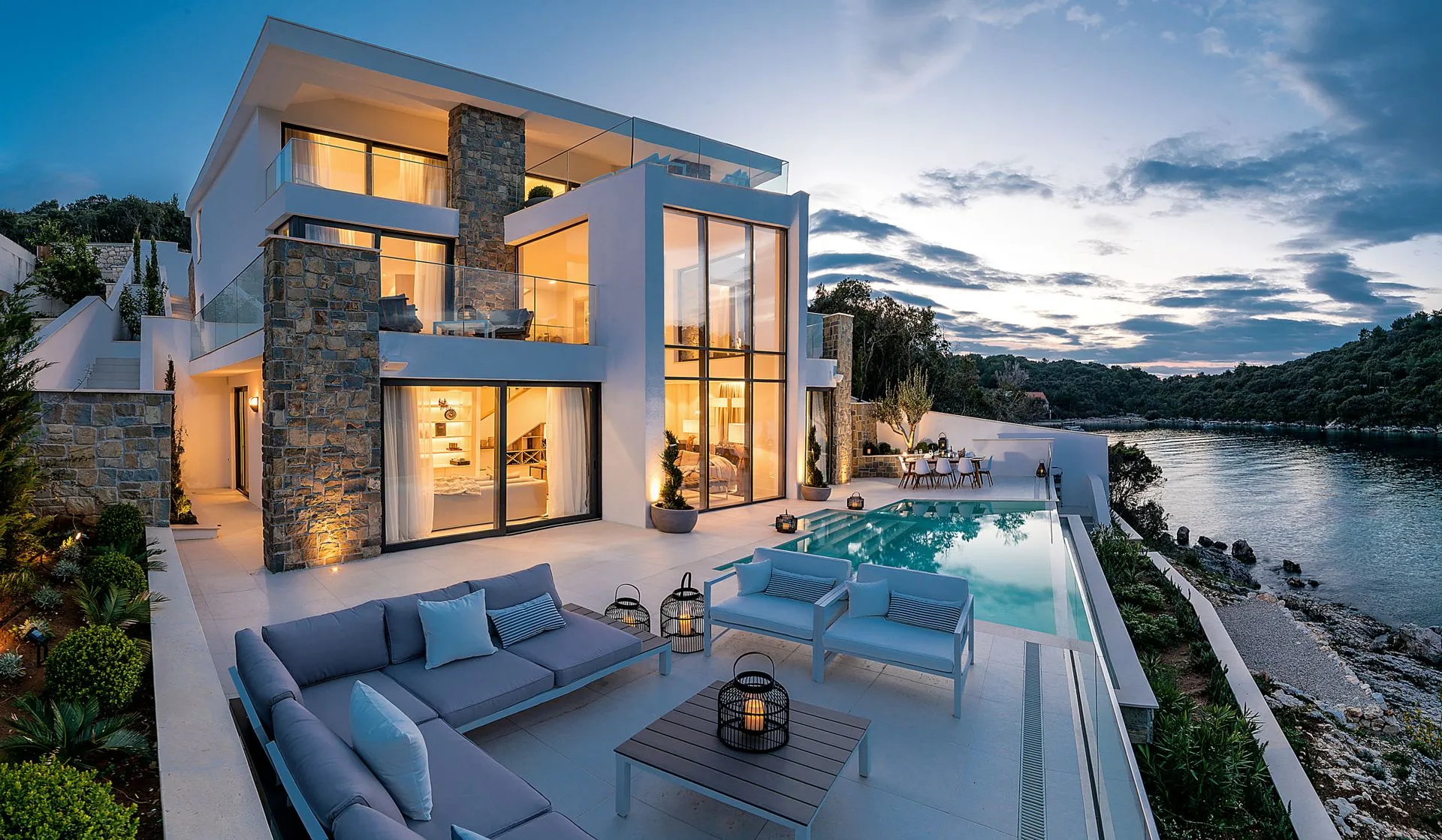
Compare High End Villa Rentals: A 2026 Definitive Editorial Reference
The global luxury villa rental market has undergone a fundamental transformation as of 2026. What was once a fragmented collection of privately owned vacation homes has matured into a sophisticated asset class that rivals, and often surpasses, the world’s most elite five-star hotels. This evolution is driven by a shift in high-net-worth (HNW) traveler priorities: a transition from “conspicuous consumption” to “privacy-first experientialism.” Today, a villa is no longer merely a backdrop for a vacation; it is a highly managed, technologically integrated ecosystem designed to facilitate total seclusion and bespoke service.
To effectively compare high end villa rentals, one must look past the aesthetic allure of infinity pools and architectural glass. The true distinction between a premium rental and a world-class estate lies in the “invisible infrastructure”—the quality of the staff-to-guest ratio, the robustness of the cybersecurity and physical security protocols, and the logistical agility of the management agency. As demand for ultra-exclusive stays has surged by over 70% since the early 2020s, the market has become saturated with “luxury-adjacent” properties, making a systemic comparison framework essential for the discerning traveler.
This article serves as a flagship reference for evaluating the pinnacle of the rental market. We will deconstruct the operational standards of 2026, analyze the economic trade-offs of different booking models, and explore the failure modes that can compromise a high-stakes stay. By applying institutional-grade scrutiny to the residential hospitality sector, we provide the depth required to distinguish between a beautiful house and a truly authoritative high-end villa experience.
Understanding “compare high end villa rentals”
The directive to compare high end villa rentals is frequently oversimplified into a side-by-side analysis of nightly rates and bedroom counts. However, in the 2026 luxury landscape, such metrics are secondary to the operational maturity of the property. A meaningful comparison must evaluate the villa as a service delivery platform.
The Problem of “Surface Luxury”
One of the primary risks in the current market is “surface luxury”—properties that feature high-end finishes and famous designer furniture but lack the mechanical and service redundancies of a professional hospitality operation. When you compare high end villa rentals, you must interrogate the back-of-house: Does the villa have an industrial-grade backup power system? Is there a dedicated staff quarters that ensures 24/7 service without infringing on guest privacy? The best properties are those that function like a boutique hotel but feel like a private home.
The Role of Agency Curation vs. Direct Booking
A critical axis of comparison is the source of the listing. The rise of “curated collections” (such as Airbnb Luxe or Marriott Homes & Villas) has created a middle tier of quality. However, the absolute top end of the market—estates in St. Barts, Mallorca, or the Amalfi Coast—often remains the domain of specialized, ultra-niche boutique agencies. These agencies do not just list properties; they provide a “service guarantee” that the villa has been physically inspected within the last 30 days.
The Integration of “Wellness Intelligence”
In 2026, the benchmark for a high-end villa has shifted toward “Wellness Intelligence.” This includes medical-grade air filtration, circadian lighting systems, and hyper-local nutritional sourcing. A comparison that ignores these physiological factors is fundamentally outdated. The elite traveler now expects their environment to actively contribute to their recovery and performance, not just provide a place to sleep.
Deep Contextual Background: The Evolution of Residential Hospitality
The history of the luxury villa rental is a trajectory from the “gentleman’s agreement” of the 20th century to the institutional-grade operations of 2026. In the 1980s and 90s, renting a villa was an exercise in trust, often facilitated by word-of-mouth or black-and-white brochures. There were no standardized service levels, and the “luxury” was often limited to the location itself.
The 2010s saw the “Platform Era,” where technology democratized access to high-end homes. However, this period was characterized by a lack of consistency. A guest could pay $5,000 a night and still find an empty pantry or a non-functional HVAC system. This inconsistency led to the “Professionalization Wave” of the early 2020s, where private owners began to hand over management to hospitality groups that applied hotel-grade Standard Operating Procedures (SOPs) to private residences.
By 2026, we have entered the “Integrated Estate” era. The most prestigious villas are now purpose-built for the rental market, designed with professional kitchens for private chefs, high-security perimeters for HNW individuals, and “smart” infrastructure that allows for remote monitoring of every mechanical system. The market is no longer about “renting someone’s house”; it is about accessing a managed lifestyle asset.
Conceptual Frameworks and Mental Models
To systematically evaluate a property, one should employ several mental models that look beyond the marketing copy.
1. The Frictionless Flow Model
This model assesses how the architecture and staff interact to minimize guest effort. Does the kitchen layout allow a chef to prepare a 10-course meal without crossing the guest’s path? Is the luggage delivery system integrated into the house’s flow? A villa with high “friction”—such as awkward stairs or poorly placed light switches—fails the luxury test regardless of its price.
2. The Isolation-to-Access Ratio
This framework measures a villa’s value based on its “curated seclusion.” The goal is to feel 100 miles away from civilization while remaining 15 minutes away from a private airport or a Michelin-starred restaurant. The more a property can maximize this ratio, the more it commands in the marketplace.
3. The Digital Fortress Model
For the modern traveler, physical safety is inseparable from digital safety. This framework evaluates the property’s cybersecurity: encrypted Wi-Fi networks, Faraday-shielded meeting rooms, and “no-camera” zones. In 2026, a villa that cannot guarantee a guest’s digital privacy is not a high-end asset.
Key Categories and Strategic Trade-offs
When you compare high end villa rentals, you are often choosing between different operational philosophies. Each category offers a specific value proposition with inherent trade-offs.
| Category | Typical Location | Key Staffing | Strategic Trade-off |
| Fully Staffed Estate | Bali, Amalfi, Phuket | 5+ (Chef, Butler, Houseman) | Total pampering vs. less total privacy. |
| Boutique Managed Villa | St. Barts, Mallorca | 1–2 (Daily Housekeeping) | Higher intimacy vs. more “self-service” logistics. |
| Urban Luxury Penthouse | NYC, London, Tokyo | Concierge/Security | Maximum access vs. limited outdoor/private space. |
| Wilderness Sanctuary | Montana, Costa Rica | Specialized Guides | Unique experiences vs. significant travel friction. |
| Historic Heritage Villa | Tuscany, Loire Valley | Estate Manager | Iconic atmosphere vs. potential mechanical quirks. |
Decision Logic: Group Dynamics vs. Individual Needs
The choice of category often hinges on the “unit of travel.” For multi-generational families, the Fully Staffed Estate is almost always superior because the staff manages the “chaos” of a large group. For a C-suite executive on a “deep work” retreat, the Boutique Managed Villa with a high-speed satellite uplink and minimal staff presence is the more strategic choice.
Detailed Real-World Scenarios
Scenario 1: The “Invisible” Service Failure
A group rents a $15,000-per-night villa in the Greek Islands. On the second day, the AC in the master suite fails during a heatwave.
-
The High-End Response: A professionally managed villa has an on-site maintenance person or a 2-hour SLA with a local contractor. They also have “spare” portable industrial cooling units as a redundancy.
-
Failure Mode: A direct-to-owner rental often leaves the guest waiting 48 hours for a part to be shipped from the mainland, destroying the value of the stay.
Scenario 2: The Security Breach
A high-profile guest arrives at a secluded villa in Mexico. Within four hours, a “paparazzo” drone is spotted over the pool.
-
The Technical Requirement: A true high-end rental in 2026 includes RF (Radio Frequency) jamming or detection systems (where legal) and a physical security team trained in drone mitigation.
-
Comparison Point: Does the villa agency provide a security audit of the property before you book?
Scenario 3: The Nutritional Sourcing Logistics
A guest with severe dietary restrictions (e.g., AIP diet) books a villa in a remote part of Africa.
-
The Operational Challenge: The chef must source 100% compliant ingredients in a region with limited supply chains.
-
Strategic Success: The best agencies facilitate a “Pre-Arrival Nutritional Consultation” between the guest and the chef 14 days before arrival, ensuring all supplies are flown in or sourced from certified organic local farms.
Planning, Cost, and Resource Dynamics
The financial structure of a villa stay is significantly more complex than a hotel booking. The nightly rate is often only the “base” of the expenditure pyramid.
Direct and Indirect Costs
-
APA (Advanced Provisioning Allowance): Standard in the highest-tier rentals, this is typically 20–30% of the rental price, paid in advance to cover food, fuel, and specialized requests.
-
The “Staff Gratuity” Culture: Unlike hotels, villa staff expectations vary wildly by region (e.g., 5% in Europe vs. 15% in Southeast Asia).
-
Opportunity Cost of Location: A cheaper villa 30 minutes from the beach has an “indirect cost” of 60 minutes of travel time per day, which, for a guest earning $5,000/hour, is a significant loss of value.
Estimated Pricing Spectrum (2026 Projections)
| Tier | Weekly Rate (USD) | Staffing Level | Primary Value |
| Ultra-Prime | $100,000 – $500,000+ | Full Time (8+) | Absolute privacy & total customization. |
| High-End Premium | $30,000 – $90,000 | Daily Service | “Boutique Hotel” experience in a private home. |
| Luxury Boutique | $10,000 – $25,000 | Minimal/On-call | High-end finishes in a standard neighborhood. |
Tools, Strategies, and Support Systems
To effectively compare high end villa rentals, travelers and their advisors should use a specific toolkit:
-
Digital “Walk-Through” Tools: In 2026, the best agencies provide 1:1 VR walkthroughs where a local agent walks through the house with a 360-camera to answer live questions about “small” details (e.g., the height of a step or the exact view from a specific window).
-
Acoustic Mapping: High-end comparison platforms now provide “noise maps” showing the decibel levels of the property at different times of day to ensure true tranquility.
-
Third-Party Concierge Apps: Many HNW individuals use a separate app (like Quintessentially or Velocity) to manage their off-site logistics, keeping the villa staff focused solely on the “in-home” experience.
-
Satellite Internet Redundancy: A critical check in 2026 is the presence of Starlink or similar LEO satellite systems as a backup to local fiber, ensuring “zero-dark” connectivity.
Risk Landscape and Failure Modes
The primary risks in villa rentals are “compounding.” A minor mechanical failure in a remote location can trigger a cascading loss of utility.
1. The “Neighbor Effect”
Because villas are often in residential zones, the “neighbor risk” is high. A sudden construction project next door or a loud party can negate the luxury of a $50,000 stay. Top-tier agencies “lock” the surrounding environment through neighborhood associations or ownership of adjacent lots.
2. Staff Continuity Risk
A villa stay is only as good as the chef and the butler. If the primary chef falls ill, the “service engine” stops. The best agencies maintain a “bench” of relief staff who can be flown in within 12 hours.
3. Cybersecurity Vulnerability
Residential routers are notoriously insecure. A high-end villa must provide “clean” hardware that is wiped between every guest stay to prevent data theft or the planting of tracking software.
Governance, Maintenance, and Long-Term Adaptation
How does a villa maintain its “five-star” status year after year? It requires a rigorous governance model that treats the home as a high-utilization asset.
The “White Glove” Audit Cycle
A property that is not professionally audited every 90 days will quickly degrade. This audit should cover:
-
Olfactory Analysis: Ensuring no “damp” or “stale” smells in remote areas.
-
Mechanical Stress Tests: Running all AC units and pool heaters at maximum capacity for 24 hours.
-
Digital Sanitation: Verifying all smart devices are updated and guest data is purged.
Layered Maintenance Checklist
-
Daily: Pool chemistry and “soft” landscaping.
-
Weekly: HVAC filter checks and pest perimeter monitoring.
-
Quarterly: Deep fabric cleaning and stone surface sealing.
-
Annually: Structural integrity checks (especially for coastal properties).
Measurement, Tracking, and Evaluation
Post-stay evaluation is the only way to ensure future quality. The “Leading” vs. “Lagging” indicator model is particularly useful here.
-
Leading Indicator: The speed and detail of the pre-arrival questionnaire (indicates the management’s level of preparation).
-
Lagging Indicator: The “Re-book Rate” for the specific property (the ultimate signal of quality).
-
Qualitative Signal: The “Invisible Hand” effect—did the staff solve a problem before the guest even noticed it existed?
Documentation Examples
-
Pre-Arrival Preference Sheet: Tracking everything from water temperature to the specific brand of toiletries.
-
Service Logs: A daily internal log kept by the butler to ensure “continuity of care” across staff shift changes.
Common Misconceptions and Oversimplifications
-
Myth: More bedrooms equals more luxury.
-
Correction: Often, a 3-bedroom villa on a 10-acre estate is more “luxurious” than a 10-bedroom mansion on a half-acre lot. Luxury is about the ratio of space to density.
-
-
Myth: Photos are always an accurate representation.
-
Correction: Professional photography can hide “contextual nuisances” like a busy road just out of frame. Always check satellite views or request a live video tour.
-
-
Myth: High price guarantees high service.
-
Correction: Price often reflects the real estate value, not the operational value. Some of the most expensive villas are “unstaffed,” requiring the guest to manage their own logistics.
-
-
Myth: You don’t need travel insurance for a villa.
-
Correction: Villa contracts are often much stricter than hotel contracts. A “cancel-for-any-reason” (CFAR) policy is mandatory for high-stakes bookings.
-
-
Myth: Airbnb is the only way to find villas.
-
Correction: The ultra-prime market often operates entirely “off-market” through private family offices and niche brokers.
-
Conclusion
The ability to compare high end villa rentals effectively is a hallmark of the sophisticated modern traveler. It requires moving beyond the “visual economy” of social media and adopting a systemic, analytical approach to residential hospitality. As the market continues to fragment into specialized niches—from high-desert sanctuaries to urban fortresses—the “definitive” villa will always be the one that aligns its operational strengths with the specific psychological needs of the guest. In 2026, the ultimate luxury is not the house itself, but the peace of mind that comes from knowing the environment is perfectly controlled, secure, and entirely responsive to one’s presence.