How to Manage Luxury Travel Logistics: A Professional Framework
How to manage luxury travel logistics. The orchestration of high-end movement is fundamentally an exercise in risk mitigation and time recovery. In the contemporary landscape, luxury is less about the gilding on a hotel ceiling and more about the invisible infrastructure that allows a traveler to move through the world without encountering the friction of modern bureaucracy or infrastructure decay. Effective management of these variables requires a shift from a reactive mindset—solving problems as they arise—to a predictive one, where the logistical framework is designed to absorb shocks before they reach the passenger.
As global connectivity becomes more fragmented, the complexity of moving individuals, families, or executive teams across borders has intensified. Regulatory shifts, environmental mandates, and the rising volatility of commercial aviation have made “self-service” luxury an increasingly precarious endeavor. To manage these dynamics, one must treat travel as a critical operational process rather than a leisure activity. This necessitates a deep understanding of the interplay between private aviation, maritime law, ground transport security, and the nuances of international diplomatic protocols.
A primary challenge in this domain is the “veneer of simplicity.” Marketing for high-end travel often promises a seamless experience, yet the backend reality involves a staggering array of third-party vendors, international labor laws, and technical dependencies. When one of these links fails—be it a crew duty-time expiration or a localized customs strike—the entire itinerary can collapse. Consequently, the core of the discipline lies in building redundancy into every segment of the journey. This article examines the systemic methodologies required to maintain control over these complex environments.
Understanding “how to manage luxury travel logistics”
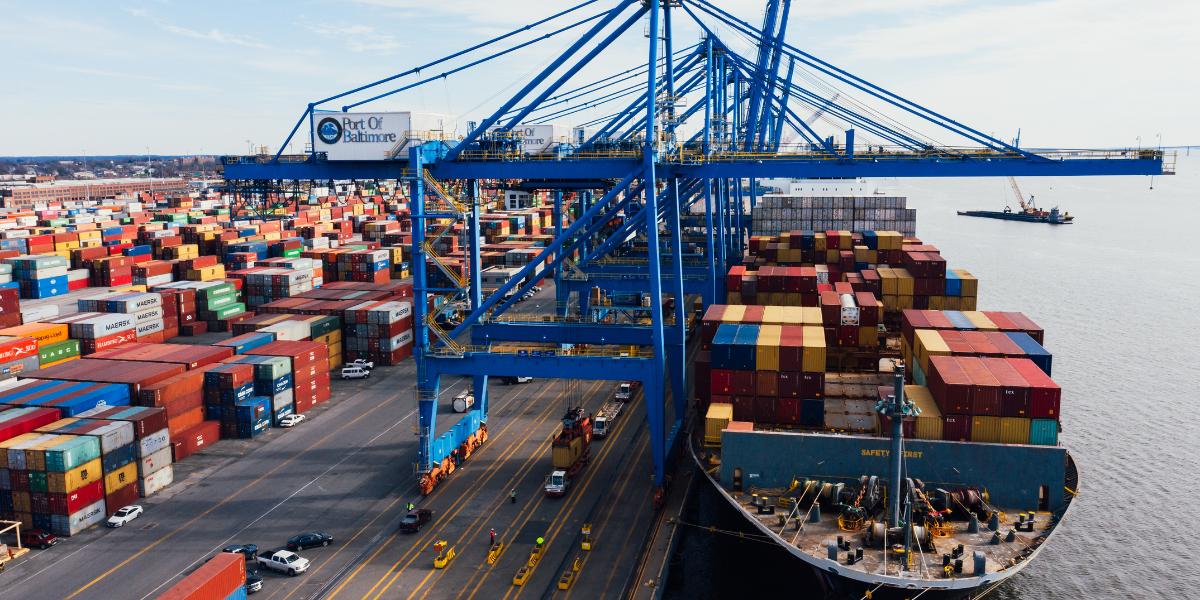
To address the question of how to manage luxury travel logistics, one must first discard the notion that logistics is merely “booking.” In a professional context, logistics is the management of the flow of things between the point of origin and the point of consumption. In luxury travel, the “thing” being managed is the human experience within a high-stakes timeframe. This involves a multi-perspective approach that balances the technical (aircraft performance, road-traffic data) with the psychological (passenger fatigue, dietary rhythm).
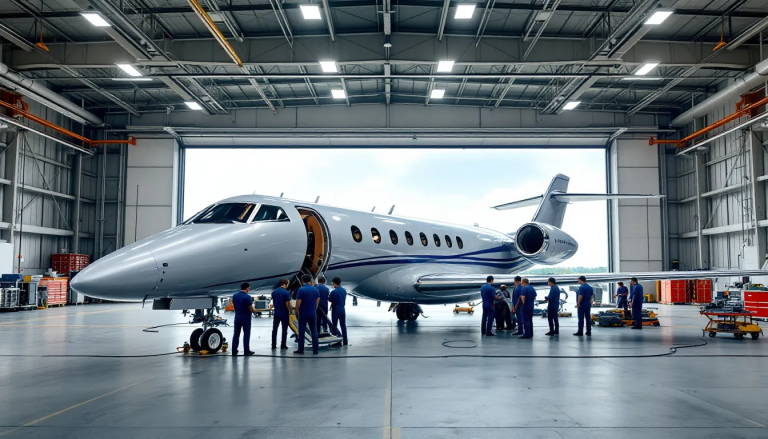
A common misunderstanding is that luxury logistics is solved by throwing capital at a problem. While capital provides access to better hardware—such as a newer G700 or a larger yacht—it does not inherently solve for systemic incompetence. A private jet is still subject to the same air traffic control delays as a commercial flight unless the logistics manager knows how to utilize secondary airfields or adjust departure windows based on meteorological trends. The oversimplification risk lies in assuming that “premium” brands provide an automatic shield against chaos; in reality, premium brands are often just as vulnerable to the “last mile” failures of local infrastructure.
Effective management also requires an understanding of “asymmetric dependencies.” For example, a $100 million aircraft’s utility can be entirely neutralized by the lack of a specific ground-handling permit in a foreign jurisdiction. Therefore, managing these logistics involves a meticulous audit of every hand-off point. It is the art of “managing the gaps” between the hotel, the car, the plane, and the destination. Those who succeed in this field do so by viewing the itinerary not as a list of destinations, but as a chain of logistical links, where the weakest link determines the success of the entire operation.
Historical Context and the Professionalization of Mobility
The management of elite movement has transitioned from the “Grand Tour” era of the 18th century—where a young aristocrat was accompanied by a “bear-leader” or tutor to navigate the complexities of European post-roads—to a hyper-digital, data-driven industry. Historically, logistics were handled by personal servants or hotel concierges whose influence was strictly localized. The “Golden Age” of travel in the mid-20th century introduced the travel agent, but their role remained largely clerical, focused on ticket issuance rather than holistic journey management.
The systemic shift occurred with the deregulation of aviation and the rise of the global high-net-worth population in the 1990s and 2000s. As travel became more accessible to the masses, the elite required a “separate layer” of infrastructure to maintain privacy and speed. This led to the professionalization of the “Travel Office” or the “Family Office Travel Manager.” These professionals brought the discipline of supply chain management to the world of leisure, treating a family vacation with the same rigor as a corporate merger.
By 2026, the evolution has moved toward “predictive mobility.” We are no longer in the era of just knowing where a passenger is; we are in the era of knowing where they will be hindered and rerouting them before they are aware of the obstacle. The historical trajectory has been a move from “coping with travel” to “orchestrating travel,” where the logistics manager acts more like a symphony conductor than a booking clerk.
Conceptual Frameworks: The Architecture of the Journey

Professional logistics managers use specific mental models to evaluate and execute complex itineraries. These frameworks help in identifying where a plan is likely to fracture.
1. The “Single Point of Failure” (SPOF) Analysis
In any itinerary, an SPOF is a component that, if it fails, brings the entire journey to a halt without an immediate alternative. A common SPOF is a specific connection in a remote airport with only one flight per day. How to manage luxury travel logistics. The framework requires that for every critical segment, a “shadow plan” exists. If the primary flight is grounded, the manager must already know the tail number and pilot contact for the nearest available charter.
2. The Fatigue-to-Value Ratio
This model measures the biological cost of travel against the experiential or business output. A logistics plan that requires a passenger to cross ten time zones and immediately enter a high-stakes negotiation is a failure of logistics. The manager must calculate “recovery periods” and “bio-rhythm synchronization,” ensuring that the logistics support the passenger’s cognitive state, not just their physical location.
3. The “Last Mile” Granularity Model
Most logistical failures happen in the final five miles of a journey. This framework demands that the transition from the airport to the final door be as scrutinized as the transoceanic flight. It includes vetting the specific driver, the vehicle’s clearance for certain gates, and even the “walk-time” within a terminal.
Key Categories of Logistical Oversight

Managing high-end movement requires oversight across several distinct but interlocking categories. Each carries its own set of trade-offs.
| Category | Core Focus | Potential Trade-off |
| Aviation Management | Slot times, fuel stops, crew duty cycles. | Speed vs. Cost; Directness vs. Weather safety. |
| Ground Security | Vetted drivers, armored vehicles, and route recon. | Safety vs. Discretion; Security vs. Comfort. |
| Maritime Logistics | Berth availability, provisioning, and weather windows. | Access to coves vs. Stabilization/Comfort. |
| Health & Wellness | Medical tele-presence, dietary supply chain. | Personal freedom vs. Biological optimization. |
| Digital Sovereignty | Secure Wi-Fi, encrypted comms, hardware safety. | Connectivity vs. Privacy; Speed vs. Security. |
| Border Management | Visa prep, diplomatic clearance, customs bypass. | Speed of entry vs. Regulatory scrutiny. |
Decision Logic: Reactive vs. Proactive
The choice of category focus depends on the “Threat and Friction Assessment” conducted before the journey. In a stable environment like Western Europe, the focus may be on “Wellness and Speed,”how to manage luxury travel logistics. In a volatile region, the weight of the logistics shifts heavily toward “Ground Security and Border Management.”
Real-World Scenarios: Decision Points and Failure Modes
Scenario A: The Multi-Stop Sovereign Mission
A delegation must visit four Asian capitals in five days.
-
Decision Point: Choosing between a large-cabin long-range jet (G650) or two smaller, more agile jets.
-
Logistical Reality: While the G650 is more luxurious, some secondary airports in the region have runway weight limits or limited hangar space.
-
Failure Mode: Selecting the larger aircraft and being diverted to a major hub three hours away from the actual meeting site.
-
Second-Order Effect: The delay in the first city cascades through the next three, forcing the cancellation of the final leg.
Scenario B: The Remote Island Buy-out
A family is taking over a private island in the Maldives.
-
Decision Point: Scheduling the seaplane transfer versus a private yacht transfer from the international hub.
-
Logistical Reality: Seaplanes do not fly after dark. If the international flight is delayed by two hours, the family is stranded at the hub airport overnight.
-
Constraint: The yacht transfer is slower but operates 24/7.
-
Resolution: The logistics manager keeps both on standby, utilizing the yacht as the “fail-safe” option.
Economics of Logistics: Costs and Resource Allocation
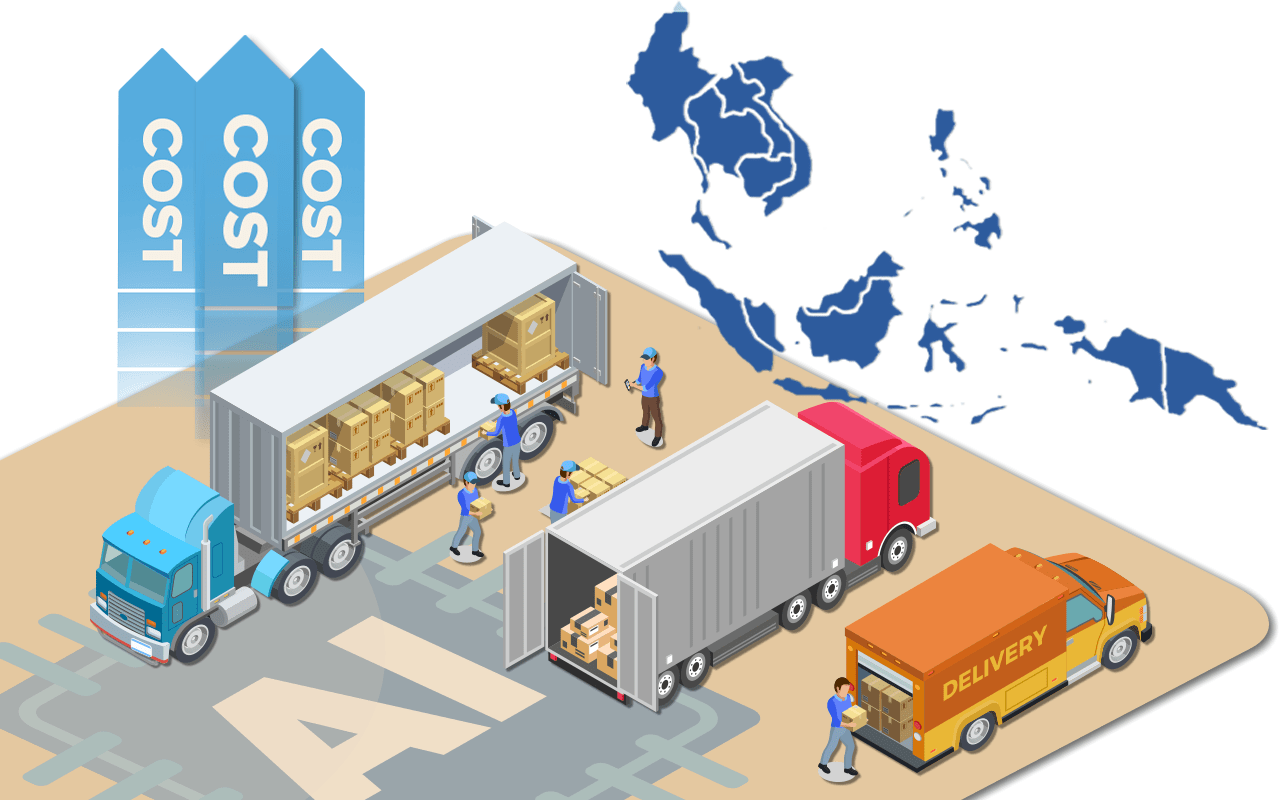
Understanding the financial dynamics of luxury logistics requires looking past the invoice to the “Total Cost of Movement.”
| Expense Type | Direct Cost Example | Indirect/Opportunity Cost |
| Aviation | $8,000 – $15,000 / hr | Cost of a missed day in a high-stakes negotiation. |
| Security | $1,500 – $5,000 / day | Brand/reputational risk of a security incident. |
| Staffing | $500 – $1,500 / day | Error rate of using non-vetted local fixers. |
| Redundancy | $10,000 – $50,000 (Hold fees) | Cost of “stress-tax” on the principal’s health. |
The Value of Redundancy
A common error in budgeting is viewing “standby” services as wasted capital. In high-end logistics, the “standby” is an insurance policy. How to manage luxury travel logistics. The cost of holding a backup car or a secondary flight path is usually a fraction of the cost of a failed mission or a compromised security situation.
Tools, Strategies, and Support Ecosystems
Effective logistics are built on a “stack” of tools and human networks that provide real-time intelligence.
-
Global Flight Tracking (ADS-B): Beyond standard apps, professionals use satellite-based tracking to monitor weather and congestion in real-time.
-
Local “Fixer” Networks: Trusted, vetted individuals in-country who can navigate local bureaucracy, from police escorts to medical emergencies.
-
Encrypted Itinerary Management: Tools that allow the principal and the team to see updates instantly without exposing the data to public servers.
-
Bio-Metric Monitoring: For long-haul travelers, using wearable tech to adjust cabin lighting and meal times to fight jet lag.
-
Pre-Arrival “Advanced” Teams: Sending a junior staffer 24 hours ahead to walk the routes, check the hotel suite for privacy leaks, and test the local Wi-Fi.
-
Customized Ground Handling: Using FBOs (Fixed Base Operators) that offer “tarmac-to-car” transfers to bypass the main terminal entirely.
-
Satellite Communications: Ensuring that even in “dead zones,” the security team has a constant link to the global operations center.
The Risk Landscape: A Taxonomy of Disruptions
Risk in luxury travel is rarely a single event; it is usually a “compounding failure.”
-
Regulatory Risk: Sudden changes in visa requirements or airspace closures (e.g., geopolitical shifts).
-
Technical Risk: A “Mechanical AOG” (Aircraft on Ground) event. This is the most common disruptor in private aviation.
-
Personnel Risk: A pilot or key security staffer falling ill in a foreign country.
-
Information Risk: A breach of the travel schedule that leads to unwanted media attention or a security threat.
-
Infrastructure Risk: A strike at a major fuel provider or a power outage at a private terminal.
The taxonomy of risk suggests that “High Probability/Low Impact” events (like a traffic jam) should be automated out of the plan, while “Low Probability/High Impact” events (like a medical evacuation) require a pre-vetted, contracted solution on standby.
Governance, Maintenance, and Long-Term Adaptation
For a family office or a corporation, the management of travel logistics must be governed by a “Standard Operating Procedure” (SOP).
The Audit Cycle
-
Quarterly Review: Evaluating the performance of vendors (charter firms, car services, hotels). Did they meet the service-level agreement (SLA)?
-
Post-Mission Debrief: A rigorous analysis after every major trip. Where was the friction? What was the “actual vs. planned” time of arrival?
-
Vendor Diversification: Ensuring the office is not over-reliant on a single broker or operator, which could lead to leverage loss or service degradation.
Maintenance Checklist
-
Are all passports and visas valid for at least 12 months ahead?
-
[ ] Is the “Medical Profile” for each passenger updated with current prescriptions?
-
[ ] Have the security “Safe Havens” in frequent destinations been re-vetted in the last six months?
-
[ ] Is the digital encryption on the travel team’s hardware up to current standards?
Measurement and Evaluation of Logistical Efficacy
How do you determine if you are successfully managing these variables? It requires both hard and soft metrics.
Quantitative Signals
-
Dispatch Reliability: The percentage of scheduled departures that happened on time.
-
Friction Time: The total minutes spent in “non-value” activities (waiting for cars, standing in customs).
-
Cost Variance: The difference between the planned logistical budget and the actual spend (including emergency pivots).
Qualitative Signals
-
The “Invisible” Factor: Does the principal feel like they are being moved, or do they feel like they are “traveling”? The more invisible the logistics, the better they are managed.
-
Cognitive Readiness: Is the principal able to perform their primary function immediately upon arrival?
-
Decision Density: How many times was the principal forced to make a logistical decision during the trip? (Ideally, zero).
Common Misconceptions and Oversimplifications
-
“The Pilot handles the logistics. The pilot handles the plane. They are often unaware of ground-side issues like hotel readiness or security route closures.
-
“Newer planes don’t break”: Brand new aircraft often have “infant mortality” issues with their avionics. A well-maintained five-year-old jet is often more reliable.
-
“First Class is just as good as private”: Commercial first class is a luxury product; private aviation is a logistical tool. They are not comparable in terms of time recovery.
-
“The Concierge can fix anything”: A hotel concierge works for the hotel, not for you. Their loyalty is to their local vendors, not necessarily to your schedule or privacy.
-
“Logistics is just common sense.” Logistics is a technical discipline involving fuel calculations, labor laws, and international treaty navigation. Common sense is not a substitute for expertise.
-
“Security is only for dangerous places”: In 2026, security is as much about “Privacy and Crowd Management” in London or NYC as it is about safety in volatile regions.
Ethical and Practical Considerations in 2026
The management of luxury travel now carries an ethical burden: the “Carbon Footprint vs. Efficiency” debate. Managing logistics in the modern era involves navigating the optics and the reality of environmental impact. This has led to the rise of “Carbon-Neutral Logistics,” where the use of SAF (Sustainable Aviation Fuel) and high-quality offsets are baked into the SOP.
Furthermore, there is a practical shift toward “Subtle Luxury.” In many parts of the world, high-visibility movement is a liability. The logistics manager must now balance the desire for comfort with the need for “Low-Profile Operations.” This involves choosing non-branded vehicles and utilizing secondary, less-conspicuous entrances at major venues.
Conclusion: The Synthesis of Presence and Planning
Mastering the art of how to manage luxury travel logistics is about creating a vacuum in which the traveler can exist. When logistics are managed with true expertise, the complexity of the world vanishes. The plane is there because it was always going to be there; the car is waiting because it is an extension of the room; the border is crossed because the paperwork was settled weeks ago.
This level of orchestration is not the result of a single brilliant act, but the accumulation of a thousand small, disciplined observations. It requires an analytical mind that enjoys the “puzzle” of international movement and a professional temperament that remains calm when the puzzle pieces change shape in mid-air. In the final analysis, the most sophisticated logistical plan is the one that the passenger never has to think about. It is the silent, tireless machinery of preparation that allows the principal to be fully present in their destination, unburdened by the mechanics of how they arrived.