How to Plan Exclusive Events on a Budget: The 2026 Definitive Reference
The landscape of experiential luxury has undergone a profound structural decoupling as of 2026. Historically, the “exclusivity” of an event was tethered almost exclusively to its capital intensity—a direct correlation between spend and status. However, the modern marketplace for high-end gatherings has pivoted toward a mandate for “intellectual and social scarcity.” This transition is driven by a sophisticated tier of attendees who view generic, high-spend opulence as a form of sensory congestion, preferring instead the restorative intersection of intimacy, relevance, and curated immersion.
Planning for such gatherings requires a fundamental departure from the traditional model of “buying” an experience. It necessitates a forensic understanding of how event costs are structured and where margin can be reclaimed without compromising the perceived value of the finish. In an era of rising labor costs and inflationary pressure on prime venues, the ability to engineer “exclusivity” through scarcity, timing, and unbundled services has become the primary marker of a master event strategist. The challenge is no longer merely finding a caterer; it is a matter of logistical sovereignty—the ability to control the environment while mitigating the “middleman” premiums that often inflate budgets by 40% to 60%.
This article serves as a systemic deconstruction of high-end event production under fiscal constraints. We will explore the historical evolution of the “elite gathering,” examine the mental models required to evaluate service integrity, and provide a definitive reference for the operational blueprints that distinguish a world-class event from a standard commercial function. By treating the event as a managed asset rather than a series of invoices, we provide the depth necessary to navigate the complexities of 2026’s luxury experience market.
Understanding “how to plan luxury events on a budget”
The term “budget” is frequently used as a colloquialism for “inexpensive,” but in a professional editorial context, it refers to a specific set of fiscal parameters that demand efficiency. To understand how to plan exclusive events on a budget, one must first recognize that “exclusivity” is a psychological construct, not a financial ultimatum. It is the delta between a guest’s expectations and the reality they encounter. If a guest enters a space that feels culturally or socially restricted, the financial cost of the floral arrangements becomes secondary to the social capital of the invitation.
The Distinction of Curated Scarcity
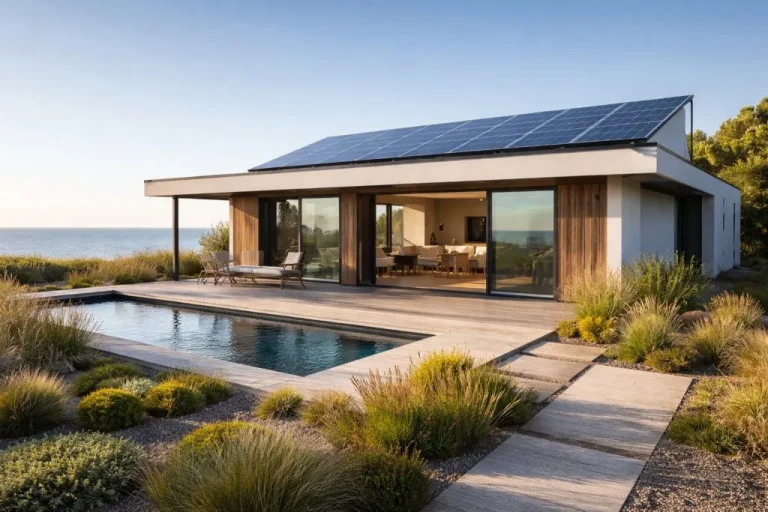
A primary misunderstanding is the belief that exclusivity requires a prime-time, prime-location venue. In 2026, the most authoritative events utilize “non-commercial assets”—private residences, repurposed industrial spaces, or natural environments—that are not available for standard rental. By removing the venue from the “events marketplace,” the planner eliminates the high-margin “event rental tax” and establishes a sense of unique access. This is the cornerstone of budget-conscious exclusivity: shifting the value from the price of the room to the rarity of the room.
The Problem of Bundled Service Premiums
Traditional event planning often relies on full-service agencies that bundle catering, decor, staffing, and technical support. While convenient, this model includes multiple layers of management markups. Mastering the budget-restricted elite event requires “unbundling.” This involves the planner acting as the general contractor, hiring specialized subcontractors directly. The complexity of this approach is higher, but it allows for the reclamation of significant margin, which can then be reinvested into high-impact “anchor” elements like specialized guest speakers or bespoke giftings.
The Psychology of Intentional Intimacy
High-net-worth attendees are increasingly seeking “low-noise” environments. The goal of cost-efficient exclusivity is to trade volume for depth. By reducing the guest list from 200 to 40, the planner can maintain a five-star per-capita spend while keeping the total budget within modest bounds. This “Intimacy Alpha” is often overlooked; a small, perfectly executed gathering in a unique location feels more “exclusive” than a massive gala in a generic hotel ballroom, despite the latter costing ten times as much.
Deep Contextual Background: The Evolution of Elite Gatherings
The trajectory of the exclusive event can be mapped through three distinct phases: the Gilded Age Grandeur, the Institutional Gala, and the modern era of “Stealth Luxury.”
The Gilded Age Grandeur (Late 19th Century)
The original “exclusive events” were the private balls of the Astors and Vanderbilts. These were defined by total self-sufficiency; the events took place in private homes with private staff. There was no “event industry” to charge markups. Exclusivity was a function of lineage and the physical capacity of the ballroom. This was an era of high-visibility spend, where the objective was to demonstrate the lack of budget constraints.
The Institutional Gala Phase (1950s–1990s)
As society decentralized, exclusivity moved into the public sphere. The charity gala and the museum fundraiser became the primary theaters of social status. This era birthed the professional “event planner” and the “event venue.” Exclusivity was sold as a ticket price. This period also saw the standardization of the “event package”—the rubber-chicken dinner and the generic floral centerpiece—leading to a “commodity trap” where spend was high but authentic exclusivity was low.
The Era of Stealth Luxury (2020s–2026)
Following the global shifts of the early 2020s, the market has pivoted toward “Private-Use” enclaves. The dominant trend in 2026 is the rejection of the “public-private” venue in favor of sites that offer “Operational Sovereignty.” Planners are now looking for ways to bypass the institutional markups of the hospitality industry. This phase is characterized by a desire for intellectual scarcity—events that offer access to ideas or people that cannot be bought via a standard ticket.
Conceptual Frameworks and Mental Models
To effectively navigate the production of a high-end event under constraints, one must utilize mental models that prioritize systemic efficiency.
1. The Anchor-Filler Model
This model posits that a guest’s memory of an event is dictated by one or two “peak” moments rather than the average of the whole experience.
-
The Anchor: A high-impact, high-spend element (e.g., a Michelin-starred chef or a performance in a unique setting).
-
The Filler: High-quality but lower-cost components (e.g., minimalist decor or a focus on ambient sound rather than complex AV). By allocating 60% of the budget to a single Anchor and 40% to efficient Fillers, the event achieves an “Exclusivity Index” far higher than its actual spend would suggest.
2. The Social Density Framework
Exclusivity is inversely proportional to the ease of entry. This framework evaluates the event based on the “Friction of the Invitation.” By introducing non-monetary barriers—such as an application process, a specific referral, or a requirement for a specific professional or intellectual background—the planner increases the perceived value. This allows for a reduction in physical spend, as the guests themselves become the primary “amenity” of the event.
3. The “Unbundled Logistics” Loop
This is the operational engine of budget control. It involves breaking every service into its raw components: labor, materials, and management. To reduce fees, the planner provides the “Management” layer and sources the “Materials” (e.g., renting high-end glassware from a warehouse rather than through a caterer). This reclamation of the middleman’s margin is the only way to achieve five-star results on a three-star budget.
Key Categories or Variations
Exclusive events on a budget fall into several distinct typologies, each requiring a specific strategy for margin protection.