The Professional Standard of Lifestyle Management: A Luxury Concierge Service Guide
The modern global landscape has transformed the concept of personal assistance from a hospitality amenity into a sophisticated logistical discipline. While the origins of the concierge are rooted in the management of physical keys and guest reception, the contemporary iteration involves the orchestration of high-stakes lifestyle management, private aviation coordination, and global mobility. Luxury Concierge Service Guide, For the high-net-worth individual or the corporate family office, the challenge is no longer about obtaining information—which has been commoditized by digital platforms—api but about the acquisition of time and the mitigation of logistical friction.
Navigating this sector requires an understanding of the invisible networks that facilitate “impossible” access. It is not merely a matter of financial expenditure; it is an exercise in social capital, vetting protocols, and the management of a complex supply chain of global service providers. A luxury concierge operates as a buffer between the client and the chaos of an increasingly saturated market for high-end services. This editorial analysis serves as a comprehensive exploration of the mechanics, economics, and operational frameworks that define the current state of professional lifestyle management.
The depth of this inquiry is necessitated by the fragmentation of the industry. From hotel-based desks to independent lifestyle management firms and specialized “boutique” agencies, the range of service quality and ethical oversight varies significantly. To evaluate these services effectively, one must look past the marketing veneer of “bespoke service” and examine the structural realities of global networks, response times, and the sustainability of access. This document provides the systemic grounding required to move from passive consumption to informed engagement with these specialized service models.
Understanding “luxury concierge service guide.”

The utility of a luxury concierge service guide lies in its ability to clarify the distinction between service and solution. In common parlance, “luxury concierge” is often used as a catch-all term for any high-priced booking service. However, a professional editorial perspective recognizes that true elite service is defined by its proactive nature. It is the transition from a reactive model—where a client asks for a specific reservation—to an anticipatory model—where the service provider identifies and solves a logistical bottleneck before the client is aware of its existence.
The Problem of Visibility vs. Efficacy
Many individuals mistakenly equate the quality of a concierge service with the “fame” of the firm or the celebrity status of its client list. This is an oversimplification. The efficacy of a service is actually found in its “back-office” strength: the legal teams that vet international villa rentals, the security consultants who assess travel routes, and the medical advisors on retainer. A concierge service is only as strong as its secondary and tertiary networks. If a guide focuses solely on the “front-end” experience (the luxury hotel room or the table at a Michelin-starred restaurant), it ignores the more critical “back-end” requirements of modern lifestyle management.
The Risk of Commoditization
As the digital economy matures, many entry-level services have adopted the “luxury” label while functioning as little more than call centers with slightly better scripts. The risk for the user is engaging with a service that lacks the actual relationships required to bypass standard waiting lists. A definitive guide must distinguish between a service that queries a database and a service that influences a network. The former is a search engine with a voice; the latter is a professional proxy.
Deep Contextual Background: The Systemic Evolution
The history of the concierge is a history of changing power dynamics. Medieval European “Comtes des Cierges” (keepers of the candles) were responsible for the logistics of the royal court, managing everything from lighting to the keys of the castle. This was fundamentally a role of governance and security. As the role moved into the hospitality sector in the late 19th and early 20th centuries—symbolized by the founding of Les Clefs d’Or in 1929—the focus shifted to the traveler’s comfort.
In the 21st century, the role has undergone a third evolution: the “Professionalization of Privacy.” Following the global financial crisis and the rise of the digital “experience economy,” the concierge has become a gatekeeper in an era where everyone can see what is available, but few can actually access it. Luxury Concierge Service Guide, The evolution is driven by the scarcity of three specific commodities: time, privacy, and authentic access. Today’s service models are less about “servitude” and more about “specialized partnership,” where the concierge functions as a Chief of Staff for the individual’s personal life.
Conceptual Frameworks and Mental Models

To manage a lifestyle at an elite level, several mental models are employed by the most successful firms:
1. The Proactive-Reactive Spectrum
This framework assesses whether a service waits for an instruction or creates a plan. A Tier 1 concierge operates in the proactive quadrant, managing “life maintenance” (renewing passports, tracking medical check-ups, auditing utility bills) so that the client’s cognitive bandwidth is reserved for high-value decision-making.
2. The Relationship vs. Transaction Model
Transaction-based services rely on the client’s credit limit to solve problems. Relationship-based services rely on established reciprocity with vendors. In a crisis—such as a medical evacuation or a sudden event cancellation—a transaction often fails, while a relationship-driven network can bypass standard protocols.
3. The Signal-to-Noise Filter
For the modern client, the problem is an overabundance of options. The concierge acts as a filter, presenting only the three options that align with the client’s specific psychological profile and historical preferences. This model values the “no” as much as the “yes.”
Key Categories and Variations
Not all concierge services are designed for the same objective. Selecting the wrong model often leads to service failure.
| Category | Primary Focus | Best For | Trade-offs |
| Lifestyle Management | Long-term life administration | Busy families/HNWIs | High monthly retainers |
| Travel & Logistics | Movement and discovery | Frequent travelers | Project-based, less day-to-day |
| Boutique/Niche | Specific interest (Art, Wine, Sport) | Collectors/Enthusiasts | Limited scope outside of the niche |
| Corporate | Employee retention/incentives | Executive teams | Less personalized; volume-based |
| Security/Medical | Risk mitigation/Health | High-risk/Medical needs | Cost-intensive; “Invisible” utility |
Decision Logic: Determining Service Need
The decision to engage a service should be based on the “Complexity-to-Time” ratio. Luxury Concierge Service Guide. If the complexity of managing personal logistics (multiple homes, international travel, specialized education for children) consumes more than 15% of an individual’s productive time, the ROI on a lifestyle management firm becomes mathematically justifiable.
Detailed Real-World Scenarios
Scenario 1: The Last-Minute Global Medical Extraction
-
The Problem: A client in a remote region suffers a non-critical but urgent medical issue requiring specialized care only available in London.
-
The Concierge Response: Coordination between a private aviation provider for a medically-fitted jet, local diplomatic channels for exit visas, and the securing of a bed in a private hospital.
-
Failure Mode: Relying on standard travel insurance, which often has a 24–48 hour delay for medical review. The concierge bypasses this through a pre-vetted credit line and immediate medical-team deployment.
Scenario 2: The “Impossible” Heritage Event Access
-
The Problem: Access to a closed-door cultural event (e.g., a private viewing of a restoration at the Louvre).
-
The Concierge Response: Leveraging a long-term corporate sponsorship or a philanthropic relationship.
-
Second-Order Effect: The concierge must manage the client’s public profile to ensure they meet the social vetting requirements of the host institution.
Planning, Cost, and Resource Dynamics

The economics of a luxury concierge service are rarely transparent, but they generally fall into three structures.
-
Retainer-Based: A monthly fee ranging from $1,500 to $10,000+ per month. This buys “readiness” and dedicated personnel.
-
Project-Based: A percentage of the total spend (typically 10–20%) for a specific event or trip.
-
Tiered Membership: Fixed annual fees with varying levels of access to “on-call” staff.
Cost vs. Opportunity Cost Table
| Activity | Standard DIY Cost (Time) | Concierge Cost (Fee) | Opportunity Cost Saved |
| Planning a 10-day multi-city trip | 20–30 Hours | $2,000 – $5,000 | 25 High-value work hours |
| Securing sold-out event access | Indeterminate/Failure | $500 – $2,000 | Frustration/Loss of Social Capital |
| Household Admin (Monthly) | 10–15 Hours | $1,500 (Retainer) | Consistency/Reduced Mental Load |
Tools, Strategies, and Support Systems
The infrastructure of a top-tier concierge is a blend of high-tech and high-touch:
-
Global Distribution Systems (GDS): Direct access to flight and hotel inventory without middle-man latency.
-
Proprietary CRM: A deeply detailed database of client preferences (e.g., specific room temperatures, dietary sensitivities, preferred vehicle makes).
-
Local “Fixer” Networks: On-the-ground contractors in major global hubs who can solve physical problems (e.g., a forgotten passport, a localized protest).
-
Security Briefings: Real-time updates on political and environmental risks in planned travel destinations.
-
Encrypted Communication: Using Signal, Wickr, or proprietary apps to protect sensitive client movement data.
Risk Landscape and Failure Modes
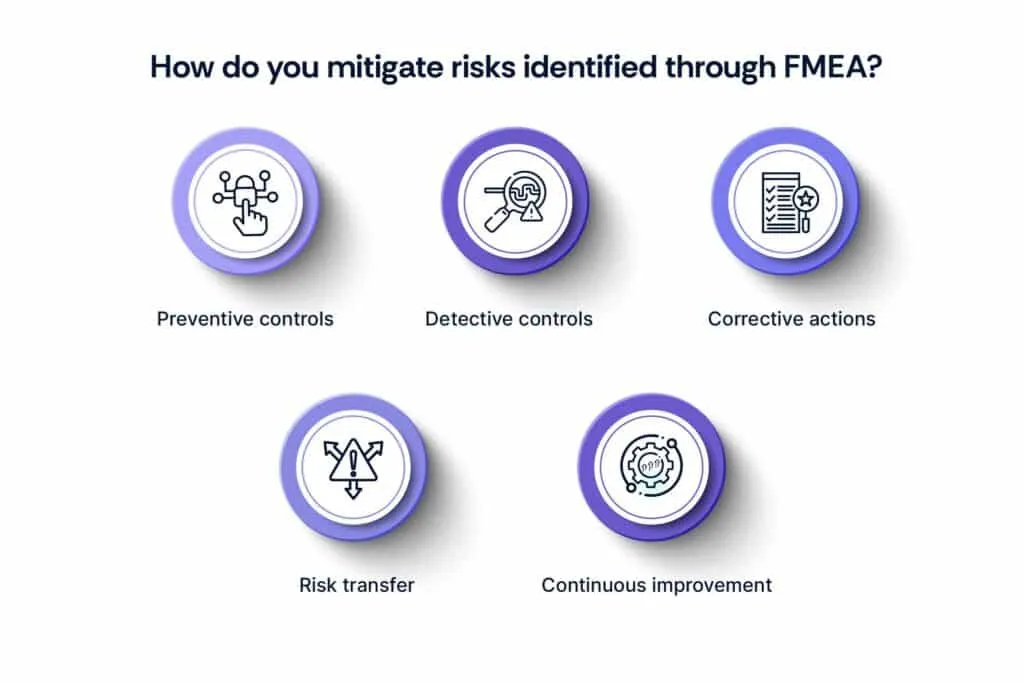
Service failure in this sector is rarely about a missed dinner reservation; it is about “Information Asymmetry” and “Logistical Fragility.”
-
The Vetting Gap: If a concierge suggests a private villa without a physical inspection in the last 12 months, the client faces risks ranging from poor maintenance to security vulnerabilities.
-
Over-Reliance on Digital Platforms: A service that relies solely on apps is susceptible to the same “sold out” signals as the general public.
-
Conflict of Interest: Some concierge firms accept commissions from vendors (hotels/charters), which can bias their recommendations. A “fee-only” model is generally considered more ethical.
Governance, Maintenance, and Long-Term Adaptation
For a concierge relationship to remain effective, it requires active governance.
-
The Quarterly Review: An audit of service speed, accuracy, and “value add.”
-
Preference Updates: As life stages change (e.g., children growing up, new health requirements), the CRM must be updated.
-
Vulnerability Assessment: An annual review of the client’s privacy footprint—how much of their movement is becoming public knowledge because of the service providers they use?
Measurement, Tracking, and Evaluation
How do you evaluate a service that is designed to be invisible?
-
Leading Indicators: Speed of initial response (should be under 15 minutes for elite tiers); the quality of the first draft of an itinerary.
-
Lagging Indicators: The number of “friction events” during a trip; the total hours returned to the client.
-
Qualitative Signals: Does the concierge provide “disagreeable advice”? A high-quality service will tell a client “no” or suggest a different course of action if the client’s request is logistically unsound or risky.
Common Misconceptions and Oversimplifications
-
Myth: A concierge can get you anything. (Correction: A concierge can get you anything that is commercially or socially negotiable. They cannot break the laws of physics or international law.)
-
Myth: They are only for travel. (Correction: The most valuable services manage home maintenance, healthcare coordination, and gift procurement.)
-
Myth: It’s cheaper to do it yourself. (Correction: While the direct cost is lower, the opportunity cost and the risk of “experience failure” are significantly higher.)
-
Myth: All hotel concierges are the same. (Correction: The “Golden Keys” (Les Clefs d’Or) signify a level of international network and training that is vastly superior to that of a standard hotel employee.)
-
Myth: Luxury concierge services are elitist. (Correction: While they serve a specific demographic, they are fundamentally a tool for functional efficiency, much like a CPA or a lawyer.)
Ethical and Practical Considerations
In a world where access is a commodity, ethical considerations regarding “jumping the queue” and local community impact are increasingly relevant. Elite services are moving toward “Sustainable Luxury”—ensuring that their clients’ access does not come at the cost of the host community’s well-being or the environment. This includes carbon offsetting for private aviation and supporting local artisans over global luxury brands.
Conclusion
The engagement of a luxury concierge service is a strategic decision to prioritize human capital over logistical noise. As global systems become more complex, the value of a trusted intermediary—someone who possesses the network, the historical context, and the operational discipline to manage a lifestyle—will only increase. An effective concierge relationship is not one of master and servant, but one of principal and agent. By understanding the frameworks and risks outlined in this luxury concierge service guide, an individual can transform their daily life from a series of logistical hurdles into a streamlined, goal-oriented experience.