The Professional Standard: Comprehensive Luxury Ski Resort Overview
The intersection of topographical rarity and architectural sophistication has transformed the mountain holiday from a rugged pursuit of athletics into a complex ecosystem of high-stakes hospitality. Luxury ski resort overview. When we examine the upper echelons of alpine destinations, the primary value proposition is no longer merely the vertical drop or the quality of the snowpack. Instead, the focus has shifted toward the orchestration of a total environment—a seamless integration of private aviation access, gastronomic density, and hyper-personalized service. This evolution demands a rigorous analytical approach for those seeking to navigate a landscape where price is often a poor proxy for actual quality.
Defining the elite alpine experience requires looking past the superficial markers of luxury. A gold-plated faucet or a high-thread-count sheet is a commodity; the true luxury lies in the invisible infrastructure that facilitates frictionless movement. This includes the logistics of gear management, the availability of specialized ski-in/ski-out terrain, and the proximity to private health facilities. For the global elite, the mountain resort functions as a seasonal hub where privacy and social connectivity must be balanced with surgical precision.
The complexity of these destinations is further compounded by geopolitical and environmental shifts. Climate volatility has forced a radical rethink of resort infrastructure, leading to a surge in high-altitude investments and sophisticated snow-making technologies. Consequently, the selection of a destination is no longer a matter of historical preference but a strategic decision involving risk assessment and long-term viability. This analysis provides the systemic grounding necessary to evaluate in environments, moving beyond the aesthetic to understand the operational and economic realities of the modern luxury mountain estate.
Understanding “luxury ski resort overview.”
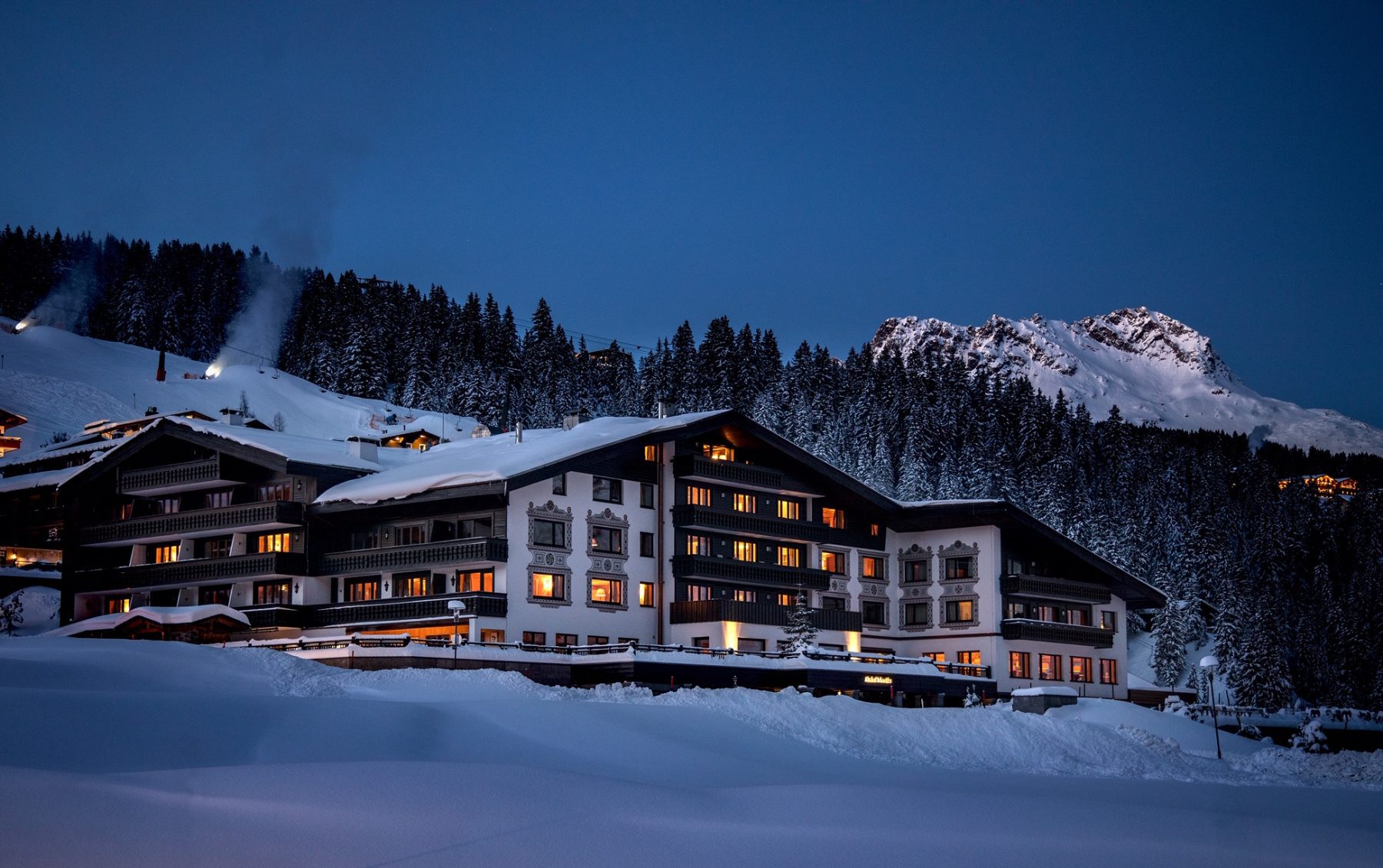
To provide a comprehensive luxury ski resort overview, one must first decouple luxury from mere expense. In the professional editorial context, a luxury mountain destination is defined by its ability to solve for the traveler’s scarcest resource: time. A resort that charges $3,000 a night but requires a 45-minute commute to the lift line is a failure of luxury architecture. True elite status is a function of proximity, exclusivity of access, and the density of high-level services within a constrained geographic area.
The multi-perspective explanation of this concept involves looking at the resort as an integrated system. From the perspective of a logistics coordinator, the resort is a node in a transport network (FBO access, helipads, heated subterranean parking). For the family office, it is a risk-mitigation environment where security and medical infrastructure are paramount. For the enthusiast, it is an athletic arena. When these perspectives clash—such as when a “scenic” location compromises medical extraction speed—the luxury status of the resort is compromised.
Oversimplification risks often stem from a reliance on “best of” lists that prioritize aesthetics over operational density. A common misunderstanding is that high-end amenities at the hotel level compensate for poor resort-wide infrastructure. However, a luxury ski resort overview must evaluate the macro-environment: the lift capacity vs. the number of hotel beds, the quality of mountain-side dining relative to village options, and the resilience of the local micro-climate. Without this systemic view, travelers often find themselves in “gilded cages”—beautiful rooms trapped in congested, low-utility resorts.
Deep Contextual Background: Historical and Systemic Evolution
The trajectory of the alpine resort began as a utilitarian endeavor. In the late 19th century, the mountains were sites of convalescence; St. Moritz initially gained fame for its mineral springs and thin air, thought to cure respiratory ailments. This medicalized luxury established the first “winter season” for the European aristocracy. The transition to athletics only occurred later, as skiing was adapted from a Scandinavian transport method into a British social sport.
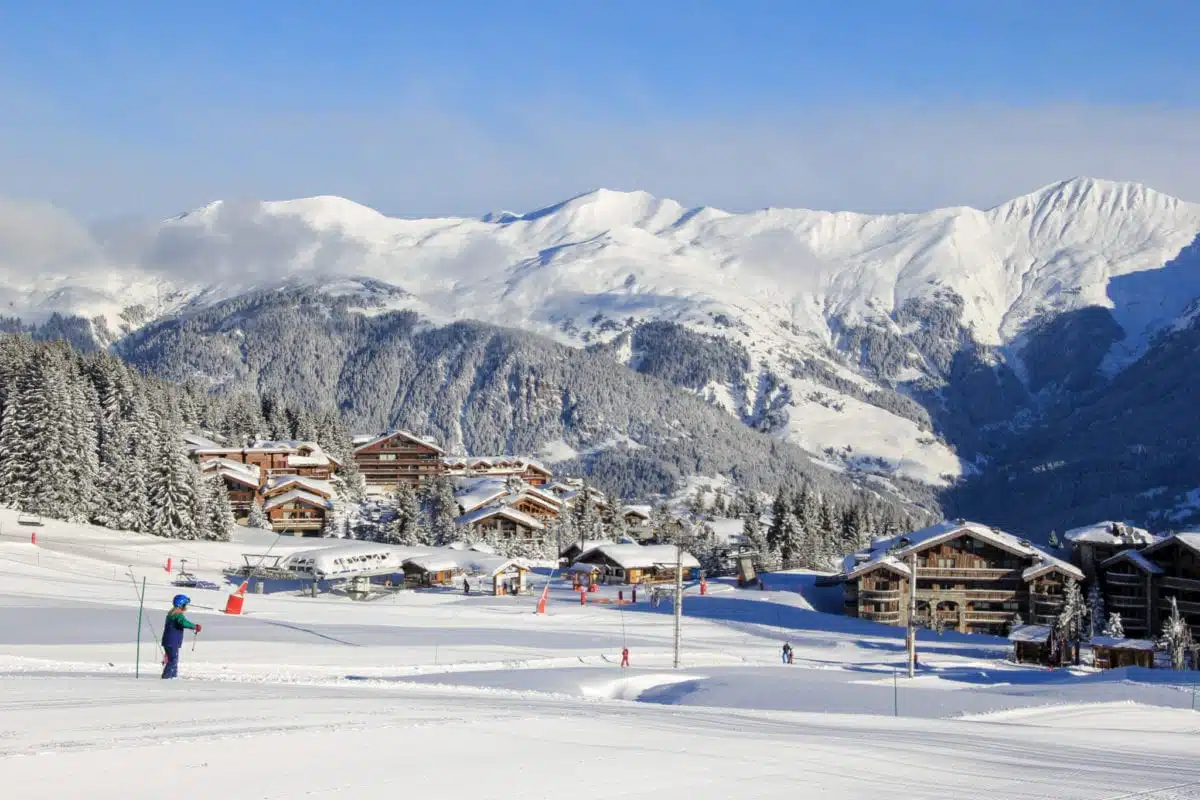
The post-WWII era introduced the “Purpose-Built” model, most notably in the French Alps. Projects like Courchevel 1850 were engineered from the ground up to optimize the relationship between the bed and the slope. Luxury Ski Resort Overview. This was the first time that urbanization principles were applied to mountains, creating the “integrated resort.” This era moved luxury away from the grand, Victorian-era hotels toward modern, efficient, ski-in/ski-out apartments.
Today, we are witnessing the “Securitization of Snow.” As climate change makes lower-altitude resorts unreliable, investment is concentrating in a few high-altitude hubs. This has led to a consolidation of ownership, where private equity and sovereign wealth funds acquire entire valleys to control the total experience. The modern luxury resort is no longer just a holiday destination; it is a fortress of predictability in an increasingly volatile climate, where snow-making capacity is as important as Michelin stars.
Conceptual Frameworks and Mental Models
To evaluate any elite mountain destination, planners should utilize several mental models that move beyond superficial ratings.
1. The Friction-Utility Ratio
This measures the time spent in non-value-added activities (transport, waiting, gear management) against time spent in the “flow state” of skiing or relaxation. A Tier 1 resort minimizes friction by providing in-room gear fitting and private, non-queued lift access. If the friction exceeds 20% of the daily schedule, the resort fails the luxury test.
2. The Micro-Climate Buffer
Given environmental volatility, a resort’s luxury status is only as stable as its altitude and aspect. A north-facing resort with a base above 1,800 meters possesses a “buffer” that a lower, south-facing resort lacks. This model treats snow as a commodity that must be hedged through topographical selection.
3. The Sensory Pacing Framework
High-stakes mountain holidays often lead to “luxury fatigue.” This model suggests that elite resorts must provide a balance between high-stimulation environments (busy villages, après-ski) and sensory-reset zones (private spas, quiet forest trails). Luxury Ski Resort Overview. Resorts that only offer one or the other often lead to suboptimal psychological outcomes for the traveler.
Key Categories and Variations
Luxury resorts are not monolithic; they serve distinct functional requirements.
| Category | Primary Objective | Typical Trade-off | Success Metric |
| Traditional/Legacy | Status, Social Continuity | High friction, aging infrastructure | Networking density |
| Technical/Frontier | Performance, Terrain | Limited village amenities | Vertical feet per day |
| Purpose-Built | Convenience, Seamlessness | Lack of historical charm | Time-to-slope ratio |
| Private/Club | Security, Seclusion | Social isolation | Privacy integrity |
| Boutique/Discovery | Novelty, Authenticity | Logistical complexity | Unique sensory input |
Realistic Decision Logic
The choice between these categories depends on the “Center of Gravity” of the traveling party. A multi-generational family requires a Purpose-Built environment where the elderly and the young can move without physical strain. Conversely, a group of high-performance skiers may find a Traditional resort stifling and would opt for a Technical/Frontier hub like Verbier or Jackson Hole, where the luxury is found in the terrain rather than the thread count.
Detailed Real-World Scenarios
Scenario 1: The Multi-Continental Corporate Retreat
-
Constraints: High-security requirements; need for confidential meeting space; varying ski abilities.
-
Decision Point: Choosing between a high-profile hub like Aspen and a private club.
-
Second-Order Effect: Opting for a public hub requires a massive security footprint that disrupts the very atmosphere the retreat seeks to foster. The elite solution often involves a “buy-out” of a boutique lodge in a lower-profile, high-altitude valley.
Scenario 2: The “Snow-Sure” Family Legacy Trip
-
Constraints: Fixed school holiday dates; high risk of poor weather; need for children’s infrastructure.
-
Failure Mode: Booking a traditional lower-altitude resort (e.g., Kitzbühel) in late March.
-
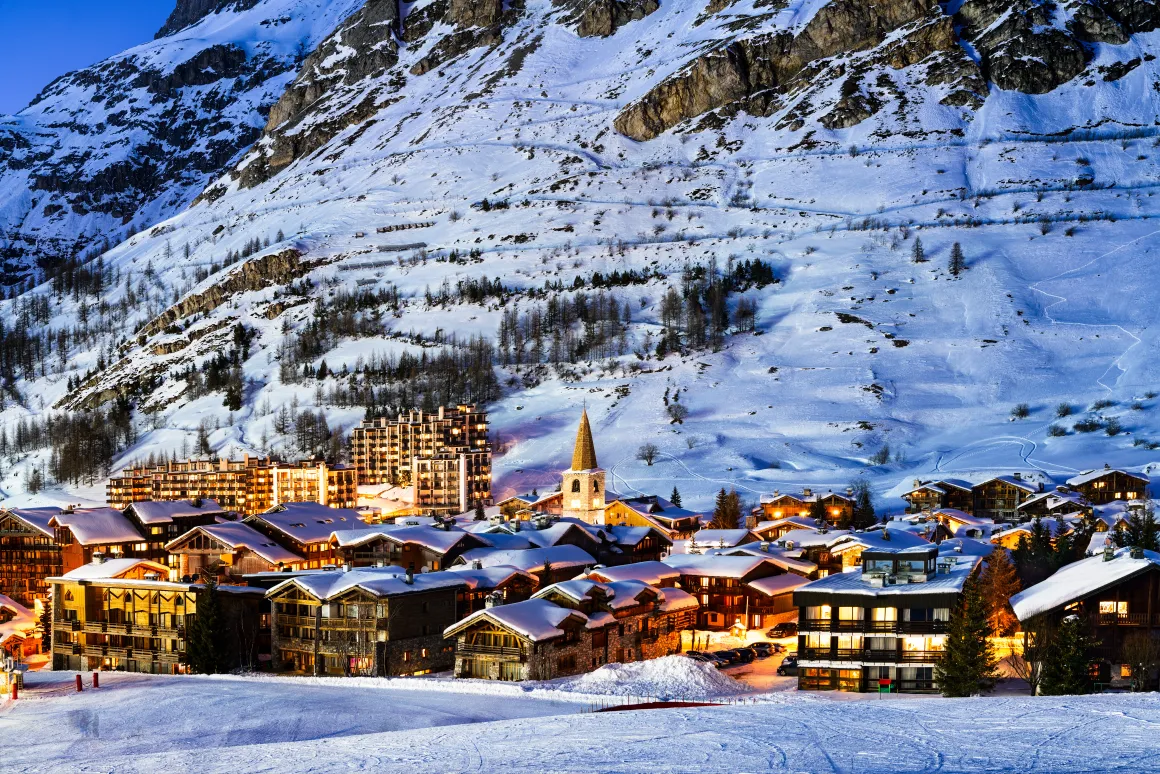
Adaptation: Shifting the destination to a high-glacier resort like Zermatt or Val d’Isère. The second-order effect is increased physical strain due to altitude, requiring a pre-trip acclimatization protocol.
Planning, Cost, and Resource Dynamics
The economics of the elite mountain experience are governed by “Access Premiums.”
| Resource | Base Tier Cost | Elite Tier Cost | The “Luxury” Value-Add |
| Transport | Commercial ($1k) | Private ($20k+) | No terminal time; direct FBO-to-Chalet |
| Gear | Rental Shop ($50/day) | In-Chalet Fitting ($200/day) | Zero transit; personalized tech support |
| Instruction | Group Lesson ($150) | Private Guide ($1k+) | Priority lift access; route optimization |
Direct costs are easily calculated, but opportunity cost is where elite planning excels. A private guide is not just a teacher; they are a “navigator of density,” ensuring the client never stands in a line or waits for a table. In this context, the $1,000 daily fee is an investment in reclaiming 2–3 hours of productive time.
Tools, Strategies, and Support Systems
The execution of a high-level mountain stay relies on several specialized systems:
-
Ski Butler Services: Independent providers who manage the logistics of equipment, including overnight drying, tuning, and delivery to different mountain access points.
-
Private Lift Access: In specific US resorts (e.g., Deer Valley or Beaver Creek), private clubs offer non-public lift gates, fundamentally altering the pacing of the day.
-
Medical Concierge: Retainers with local clinics to ensure immediate imaging and treatment for orthopedic injuries, bypassing public trauma centers.
-
Advance Logistics Teams: Personnel who arrive 24 hours before pre-stocking the chalet with specific vintage wines, dietary-specific groceries, and humidification systems.
-
Helicopter Transfers: Utilizing air-taxi services to bypass valley-floor traffic, which can be catastrophic on “change-over days.”
Risk Landscape and Failure Modes
The primary risks in luxury mountain travel are not physical danger, but “Experience Erosion.”
-
The Altitude Paradox: Rapid ascent to 2,000m+ in a private jet often leads to Acute Mountain Sickness (AMS). A luxury trip can be ruined in the first 12 hours if the body cannot adapt. Elite planning incorporates a 24-hour “low-altitude” stop or in-room oxygen enrichment.
-
Operational Fragility: A resort may have 5-star hotels but 2-star lift infrastructure. Wind holds can close high-altitude links, trapping travelers in isolated valleys.
-
Hedonic Adaptation: Stacking too many high-value experiences (Michelin dining every night) leads to a decline in appreciation. Successful itineraries “wave” the intensity of the experience.
Governance, Maintenance, and Long-Term Adaptation
For individuals who own mountain estates or visit annually, the “itinerary” must be replaced by a “governance framework.”
-
Annual Audit: Reviewing the local resort’s capital expenditure (CapEx). Are they investing in new lifts? Is their snow-making sustainable?
-
Health Monitoring: Tracking the traveler’s physical response to altitude over several years to adjust the “ascent rate” and activity level.
-
The Layered Checklist:
-
Strategic: Is the destination still “snow-sure” for the next 5 years?
-
Operational: Are the private flight slots secured for the peak dates?
-
Tactical: Is the specific instructor available?
-
Measurement, Tracking, and Evaluation
How do we quantify the success of a luxury mountain engagement?
-
Leading Indicators: Planning lead time; the ratio of private to public transit; the percentage of “north-facing” terrain in the selected resort.
-
Lagging Indicators: Total vertical feet skied; Heart Rate Variability (HRV) recovery scores; the “Net Promoter Score” of the family or group.
-
Documentation Examples:
-
The Run Sheet: A minute-by-minute staff guide to baggage and transit.
-
The Preference Log: A record of which ski boots caused discomfort and which vintage of wine was preferred.
-
Common Misconceptions and Oversimplifications
-
Myth: More money equals better snow. (Reality: Snow is a function of meteorology; money only buys the capacity to reach it or manufacture it.)
-
Myth: Ski-in/Ski-out is the gold standard. (Reality: Often, the most private and luxurious estates are set back from the slopes to avoid the noise and lack of privacy inherent to slope-side properties.)
-
Myth: Rating systems (Stars) are reliable. (Reality: Most ratings are based on room size and amenities, not on the quality of the mountain infrastructure or the staff’s local “influence.”)
Conclusion
The pursuit of the perfect alpine experience is a study in the management of environmental and logistical variables. As we have explored throughout this analysis, the difference between a high-cost vacation and a truly elite mountain engagement is the presence of a robust, redundant, and proactive planning framework. Whether the objective is the social theater of the Alps or the technical solitude of the Rockies, the fundamental requirement remains the same: the subordination of the environment to the needs of the traveler.
As the climate and global social dynamics continue to shift, the definition of a “prime” destination will evolve. Those who approach mountain travel with analytical rigor—valuing altitude, logistics, and privacy over marketing hype—will be the ones who successfully navigate the future of the high-altitude lifestyle. The resort is not merely a destination; it is a complex machine that, when properly selected and managed, provides the ultimate luxury: the freedom to focus entirely on the descent.